Humanity has thought up a lot of bad ideas. Some lost a few investors a little bit of money and some wrought disasters far-reaching enough to destroy a major civilization. Some bad ideas are only obviously bad in hindsight; others cause the observer to wonder what, or if, the people were thinking. Sometimes you’re lucky and you recognize a bad idea for what it is beforehand, and sometimes you’re unlucky and realize it only just after that point of no return where you’re forced to watch helplessly as the calamity unfolds. No matter what though, people love bad ideas; we’re drawn to them, we can’t shake them and we sometimes cling to them desperately long after we know just how bad they are.
So here, in no particular order, are ten of the worst bad ideas yet unleashed upon humanity.
“Black Slavery”
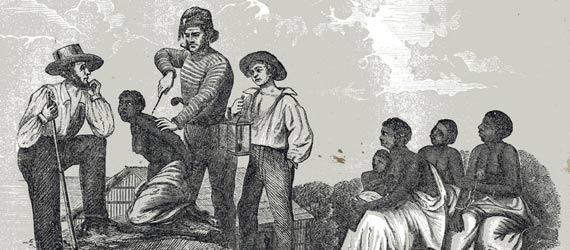
What do you do when you find a whole new continent that needs to be farmed, but shipping peasants over from Europe would be prohibitively expensive and no one really wants to come over anyway? You enslave the new land’s population is what you do. Except, in this case, the population has already been wiped out by virulent diseases you brought over. What you do then is you find another continent, vastly expand its slave trade and ship slaves over to the new continent to be the backbone of your new agrarian economy. Turns out someone did this back in the 16th Century. It worked well and at the time seemed like a good idea; except that after a couple of centuries all the areas without slavery and rich, cash crop agrarian economies compensated by industrializing. And, hey, y’know what? It turns out that industrial regions can wallop agrarian ones economically and militarily. Plus, after slavery is over, all the former slaves end up sticking around as an angry underclass gifted the delights of racism and it takes another couple centuries before anyone’s anywhere near equal. Sure, you colonists got someone to cut your sugarcane for you on the cheap and you’re dead now, but was it really worth that crap economy, social unrest, and mass slaughter of your descendants? Probably not.
“Operation Barbarossa”
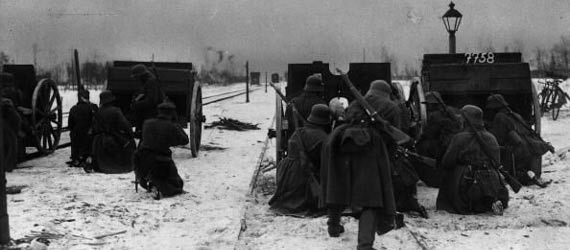
It’s 1941. You’re Hitler and you’ve just conquered Europe. The end of the war is in sight, in fact, and all you have to do is turn your full military might against the one enemy you have left and finish them off for good. Luckily for you, that one enemy is the United Kingdom; broke, ill-prepared, militarily weak and ripe for the plucking. But instead of a quick and easy victory, perhaps the greatest victory in the whole history of warfare, you (Hitler) decide you (Hitler) have an idea. A bad idea. Invade Russia and fight a two front war. In fact, it was such a bad idea that you (Hitler) yourself had warned against it in Mein Kampf. In the end the bad idea costs thirty million people their lives, loses the Germans the war and cedes Eastern Europe to the Soviet Empire leading to the Cold War and the threat of mutually assured nuclear destruction. That’s a bad idea.

“Failing to Adopt the Steam Engine”
Remember in 200 AD when the Roman ironclads sailed up the Yangtze and the Roman Legions conquered the Han Dynasty and set up a new province with the capital in Pekinginium? No, you wouldn’t remember that at all because it didn’t happen. The Romans never adopted the steam engine even though toymaker Hero of Alexandria demonstrated a working model of it in 62 AD. Granted, even with Hero’s steam wheel it probably would’ve taken a few generations before you could take a first class rail coach along the Appian Way, but we’ll never know, will we? Of course, this is one of those bad ideas that was only obviously a bad idea after seventeen centuries of hindsight, but still you think someone would’ve noticed, after seeing steam power being used to move things, that steam power could be used to move things. You know what they adopted instead of the steam engine? Hero’s vending machine. Even that they didn’t use for long.
“Abandoning Vinland”
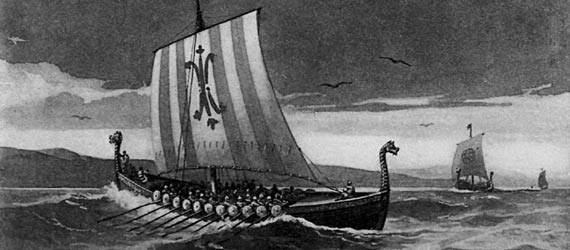
When your homeland consists of tundra, unaerable forests and a few fjords that are warm for some of the summer months, you’d think you’d jump on the sort of real estate deal the Norse found around 1000 AD. Instead of eking out a desperate existence in foggier, glacier strewn northern wastelands, they could have had New Foundland and New England; both cold, but still almost infinitely better than Greenland. Instead of settling and bringing more people over though, the Vikings decided to stop off for a bit to make use of local timber for ship repairs. Failing to do what 500 years later would get Columbus a national holiday and two state capitals named for him, the Vikings stayed a couple of months and then left, never to return again despite the abundance of grapes. Perhaps they didn’t realize that they had discovered a vast new continent or perhaps they were just scared of Skraelings. Ooh…Skraelings.
“Hunting the New World Megafauna into Extinction”
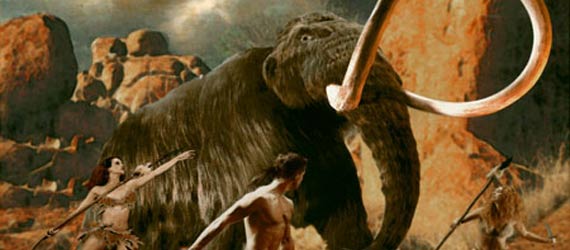
It’s understandable that after trekking across Asia, the Bering Land Bridge and the Yukon, you’d be kind of hungry. Who wouldn’t be? And apparently saber-toothed tigers, mammoths, horses, gazelles, elephants, giant land sloths and armadillos are like potato chips. You can’t eat just one. So the new Americans, who weren’t quite yet native, killed all the big animals from Alaska to Tierra del Fuego. Thus the Incas were forced to eat guinea pigs for lunch. Plus they never had horses for cavalry or work teams and making the same out of llamas was just a pain in the ass. What’s worse is that later, all the Americans died from a infestations of crowd diseases likely because they never had close contact with big animals like the Europeans did and getting near llamas was to risk your neck. It’s likely that Urgo and Mathop, as they killed the last of the giant ground sloths, never thought their actions would lead directly to the fall of the Aztec Empire millennia later. The good idea would have been to keep at least a couple of those big sloths around in case of emergency.

“Cancelling Firefly”
After Joss Whedon created one of the big hits of television history, the Fox network picked up his new show: a cowboy western, space opera type thing called Firefly. The network executives, realizing that they gave this guy a slot because he had already produced one of TV’s most memorable shows, decided that he must have known nothing about television. So, they showed a few of the episodes they had paid for, aired them out of order and then canceled it after a few weeks. Of course, since Joss Whedon must have known nothing about writing a television show, he had legions of die-hard fans who made Firefly the most popular canceled TV series since Star Trek. Whedon eventually made a financially successful movie based on the canceled show, and instead of what could have been one of the most profitable TV shows in history, Fox got Oliver Bean, The War at Home, John Doe, Titus, Andy Richter Controls The Universe, Keen Eddie, Undeclared, and Cedric the Entertainer Presents. And Firefly fans, each year, hold conventions and Serenity viewings year after year at which they, incidentally, spend loads of cash.
“Excommunicating Galileo”
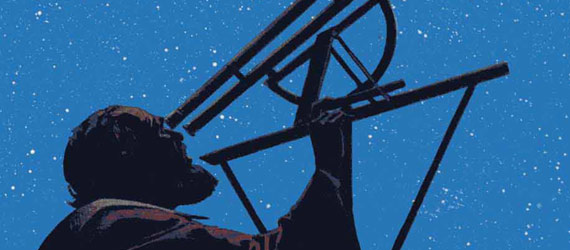
For some damn reason, the Catholic Church was opposed to the idea of the Earth going around the Sun. Perhaps it contradicted Biblical literalism, or perhaps they didn’t like some upstart astronomer horning in on their monopoly on Truth turf. Either way, they were obviously happy to murder a fellow because he happened to write down what he observed of the natural universe. Galileo was a smart guy. Not only was he smart enough to deduce that the Earth moved around the Sun and that Jupiter had moons, he was also smart enough to recant it all when angry soldiers showed up at his house and told him they’d torture and kill him horribly and painfully if he didn’t deny it all. And what did Mother Church get out of all this? Not much. They shut up Galileo for a few years, but they couldn’t shut up everyone and in the end, five hundred years later, after a long, slow retreat of their power and influence, they had to admit they were wrong. Unfortunately, they also spawned this whole ridiculous pseudo-science concept where some Christians believe they have to deny science if it disagrees with their view of Biblical literalism. Many of the greatest discoveries of science were made by religious people seeking to understand God’s handiwork, but thanks to the Catholics, now many Christians see science as the enemy of faith and happily wander down the path of idiotic superstition.

“Communism”
Back in the 19th Century it seemed, to Marx and Engels, a good idea that the workers should directly control the means of production. It seemed like a good idea to them and to a few others as well. The only problem is that it’s not a good idea. In fact it’s a rather bad idea because the means of production don’t spring from nowhere. Someone has to buy them. Someone has to invest capital in building a factory before the workers can punch in. In fact, the capitalist has to pay for that punch clock before anyone can actually punch in. That works in a capitalist society where you can kill the capitalist after he’s paid for the factory and then take it over and introduce communism. But, it never worked that way. Communism, in fact, only took hold in countries like Russia, China or Cuba, where no one had ever bothered to spend the money to build a lot of factories. That meant that someone had to build the factories and pay for the machines and time clocks, and that meant that the leading communists had to steal from the people to build the factories. Unfortunately, the leading communists made a habit of stealing from the people and the worker’s utopia never quite worked out. Marx may have said a class revolution was inevitable, but it wasn’t. Instead it was just another bad idea. Capitalist workers, on the other hand, can buy a share of that factory they work in. No, really, it’s called a stock. Look into it sometime, Karl.
“Pre-1920s Medicine”
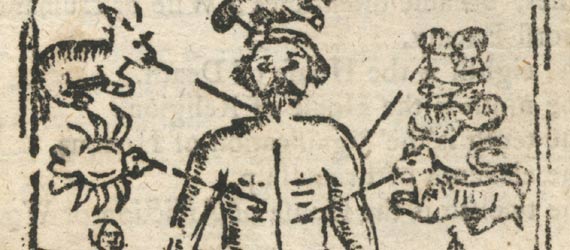
For perhaps millions of years people have been getting sick, injured and dead. For at least ten thousand years other people have been trying to help out the sick, injured and even the dead. But, until about 1920 they were not doing a good job at all. In fact, what they were doing was basically guessing. Just guessing, not even educated guesses, not even guestimates. Just random, shot in the dark, guess work. Needless to say, it didn’t work very well. The main bad idea, beyond just the usual tinctures and potions (which often involved dung), was to remove blood from the sick person’s body. Apparently they had never seen anyone bleed to death. No one from Socrates onward thought that it might be a good idea to emphasize the keeping of blood inside the body. Yeah, everything from stabbing people with needles, to dunking them in water, to sawing off limbs, to running electrodes through them was a bad idea that shouldn’t have required the benefit of hindsight. Someone probably should have perhaps examined a sick person or looked a few feet over to the pile of dead ex-patients before sticking another needle in someone’s brain in another ill fated attempt to cure the common cold. These are just bad ideas and it shouldn’t have taken twenty centuries or more to figure them out.

“That Girl”
You know her. She’s got no job, steals your money, is insane, jealous and vindictive. Chances are she’ll screw you over and then screw your friends and then screw them over. Not only that, but she isn’t that smart, she isn’t that interesting, she’s manipulative, and she cries in public just to get attention. And yet, you can’t help yourself, can you? You just dive right in, time and time again. Even though you know she’s a bad idea from day one, it doesn’t matter because she’s hot and she’s easy. And she’s a train wreck and a terrible idea. No, she’s never brought down an empire, but as far as bad ideas go, That Girl still ranks up there. But, she is hot.