Sub-Aquatic Boats Make Good
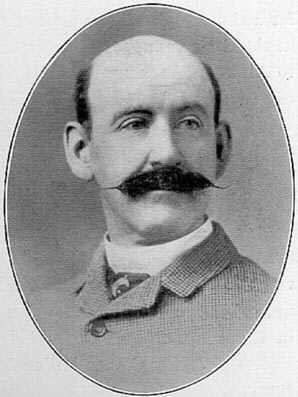
Dr. Scott Birdseye is an educator, Doctor of Philosphy and nutcracker collector. He even has a nutcracker from Rhode Island. It’s very neat.
Submarines have shown themselves to be one of the most effective weapon platforms ever devised and their crews to be the best in the navies of the world. This effectiveness was fully illustrated in the Second World War, when American submarines operating in the Pacific theatre were able surmount incredible difficulties to achieve a total victory in their war of attrition against the Japanese Navy and Merchant Fleet. The valor, courage and skill of the men of the American Navy’s submarine force proved the capability of their ships, and finally reversed the long negative history of the submarine.
In the aftermath of WWI, international conferences worked to ban the use of submarines in war. In the United States, President Harding, seeking his “Return to Normalcy”, shelved any attempt by the Navy to increase the size of the submarine force. The 1922 Washington Naval Conference backed this policy by limiting the size of the U.S. Navy, especially in the Pacific.
Despite these limitations, the U.S. Navy, in the 1920s, did build a new series of submarines, the V-Class, the design of which was based on German U-boats. These ships, with their large size and armament, would form the basis of the U.S. submarine fleet until the pre-war build up of the late 1930s.
In 1936, after the expiration of the terms of the Washington Naval Conference, the United States began its submarine building program anew. The P, S, and T Class ships were built during this period, and ranked among the best submarines in the world. However, strategic commanders did not consider submarines to be an important part of the navy.

Thus, as Japanese expansion increased in the Pacific and war threatened to break out in Europe, the United States submarine force was woefully inadequate. The United States Navy’s submersible strength in the Far East was based in two groups: The Pacific Fleet, stationed at Pearl Harbor, Hawaii, and the Asiatic Fleet, stationed at the Philippines. The Pacific Fleet Sub-Force, or SubPac, consisted of twenty-eight modern S-Class submarines, while the Asiatic Fleet Sub-Force had only six modern subs out of their total eighteen. Their remaining ships were from the First World War, and were obsolete. Fortunately for the U.S. Navy, the inferior ships of the Asiatic Fleet were destroyed or rendered unusable in the Japanese conquest of the Philippine Islands. When the U.S. entered the war in December of 1941, there were 112 subs total in the U.S. force and seventy-three under construction.
The Japanese attack on Pearl Harbor, which brought the United States into the Second World War, left much of the Pacific surface fleet destroyed. The Pearl Harbor disaster, coupled with the loss of the Asiatic Fleet in the Philippines, left the Pacific Fleet’s submarines to bear the brunt of the fighting in the earliest part of the war. Admiral Chester Nimitz would later describe the situation the U.S. faced immediately following the outbreak of the war: “When I assumed command of the Pacific Fleet on 31 December 1941 our submarines were already operating against the enemy, the only units of the fleet that could come to grips with the Japanese for many months to come.”
Continue reading