
Happy Horse
Reply

by Cavalier Jeremy-Joseph Rosen
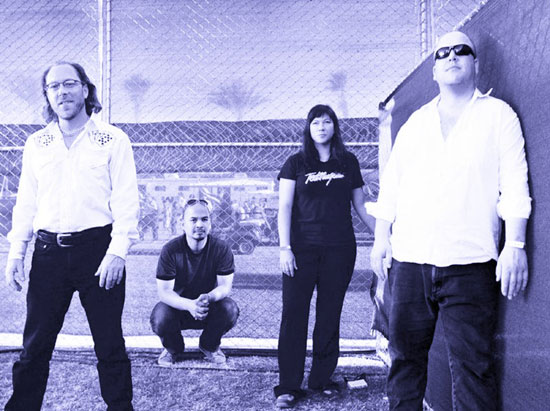
In 1987 The Pixies, labelled an alternative rock band, released a song entitled “Nimrod Son” as part of their first EP recording Come on Pilgrim. “Nimrod Son” is evocative both of the later evolution of popular music as well as The Pixies’ antecedents in rock, country, and other popular musics. “Nimrod Son” is one of the best examples of The Pixies’ often deranged and humorous lyrical content, unparalleled technical ability in relation to other groups of the time, and their influence upon contemporary and later musical groups.
To gain a better understanding of the lyrical content and its meaning we must examine the actual form of the piece as it has a large impact on an analysis of the lyrics. “Nimrod Son” opens with a steel guitar riff reminiscent of bluegrass and country music. Two bars later the bassline and the addition of the drums playing a shuffle strongly reinforces this country-bluegrass feel. The A section contains an odd number of bars and two endings both of which contain two measures of stop time with the vocalist, Black Francis, singing throughout both measures with the melody delivered mostly on one note.
The B section is odd-measured as well, suggesting an influence from early American Punk music. The first part combines two measures of a new bass line and guitar riff with two measures of those from the introduction and A section. The second half of the B section moves into a more solid rock and roll sound ideal. There is less rhythm guitar present, but the melody moves quite a bit with a backup voice adding harmony above the melody. In less than thirty seconds of music, the song has moved through influences clearly derived from at least three distinct forms of music.
Before returning to the A section a transition on a new theme enters and the tempo is slowed down by half. This transition is completely instrumental and moves around the key centre by step. A brief pause and the band is back to a repetition of the A section, then a guitar solo. The band stops briefly and then begins again from the introduction through an A section.
The range of form, tempo, and technicality of this song is quite distinct from the same elements in many other bands of the time. 1987 was a year wherein “heavy metal” bands, groups with very loud, guitar-driven songs and a rock star image were at the height of their popularity and groups like The Pixies, with odd songs and initially no commercial image at all, were still considered “underground.”
The Pixies both predicted and created the later grunge music scene which was first recognized in Seattle, though it was present in quite a range of metropolitan areas. Grunge, or alternative, music was more diverse in its forms and content across the spectrum of musical groups and can be cited as a commercial label rather than a distinctive sound. One could say what was and wasn’t grunge, or alternative, but one couldn’t always place parameters around it. See so-called world music for a similar U.S.-centric commercial classification of music.
Much of this was due to the fact that The Pixies began and spread a formula of song writing that most groups of the time didn’t. Black Francis, the leader and main writer of most of the songs in The Pixies’ book created music of great dynamic variation. Songs would often begin with a quiet intensity only to explode in the chorus with his voice, usually backed up by bassist Kim Deal, singing loudly and often without definite tone. This wide dynamic formula was adopted in due course by bands anywhere The Pixies’ music was available in recorded or live form. “Nimrod Son” is one of the earliest examples from which this influence is derived.
While exhibiting numerous differences with other groups of the time, The Pixies shared one obvious similarity borne out within the lyrical content of “Nimrod Son.” This is a propensity for typically strange and pictorial lyrics in order to either disturb or amuse the listener. A popular take on such lyrics is that they are there to frighten and scare parents and conservatives with their content. This was likely present, but unimportant, within the band’s ethos during their earliest phases because there wasn’t much of an audience for their type of music.
Following this amusing and disturbing lyrical trend, however, “Nimrod Son” apparently describes a man who discovers that he is the child of incest between his father and grandmother. This revelation is placed within the space at the end of the A section where there are only vocals and adds a huge emotional wallop as a result. On top of this the man discovers that his current lover is also his sister. Again this revelation is placed within the same space in the A section. The bridge, with its distinct change from the A section expresses his revulsion and confusion with what he has discovered through a wailing melody that floats over the rhythmically faster musical accompaniment.
Of course by itself this content is merely amusing or disturbing and it can realistically be claimed that there is little beyond Black Francis’ writing than a progression of strange images. In fact much of this type of music can be criticized for lack of literal, and even metaphorical, sense.
When the lyrics are taken within the context of the musical background of the song a more intricate description appears. Because of the obvious nod to bluegrass music in the A section I see this song as a comment on the stereotypical image of the South where people supposedly have intimate relations with close relatives and drive pickup trucks as another line from the song states. It becomes clear, however, that the exact comment being made upon this situation is essentially impossible to discover because, again, The Pixies are more concerned with imagery than commentary.
Unfortunately there is no resolution, no obvious solution, to this question contained anywhere in the song. These revelations are restated for the listener and because they have been heard before have much less impact the second time around. This could possibly be an effort to mimic the reverberations of the revelations within the man’s mind, but other songs of the period and after are rarely so introspective while being so visual simultaneously. For the most part there is nary an attempt at resolution. There is merely a picture presented and it is left up to the listener to reflect, enjoy or refuse to analyze. This would mirror quite well the historical and documented intent of the band.
Part of The Pixies’ distinction as an influence upon the rock genre is that some of its members and production staff went on to work with others in the field. The producer of the sessions on Surfer Rosa, the follow up album to the EP, Steve Albini, went on to work most notably on Nirvana’s first commercial success Nevermind and with Stone Temple Pilots. His production sound is distinctive and he is responsible for transmitting the sounds of The Pixies throughout the rock music world. He also later spoke out against the music industry (see “The Problem with Music” from Baffler No. 5).
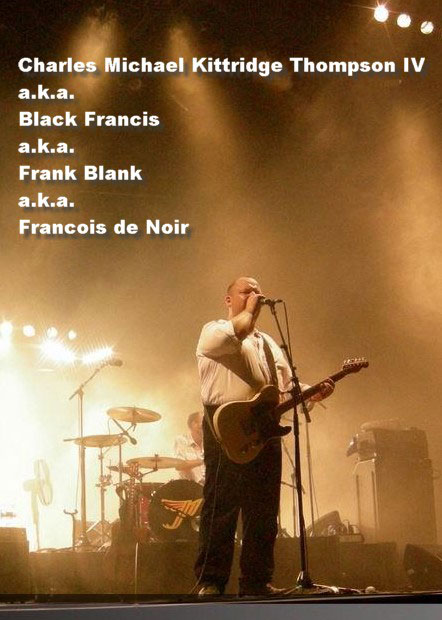
Black Francis’ history, like his music, was quite interesting as well. Born Charles Thompson, he changed his name to Black Francis during the sessions for Come on Pilgrim. After internal tensions between Black and bassist Kim Deal the band split and Black Francis went on to become Frank Black and produce three albums departing widely from The Pixies’ sound. They seemed to take influence from many of the groups that were at first influenced by The Pixies. He abandoned the formula present in “Nimrod Son” and as a result of the mood at the time fell into commercial disfavour.
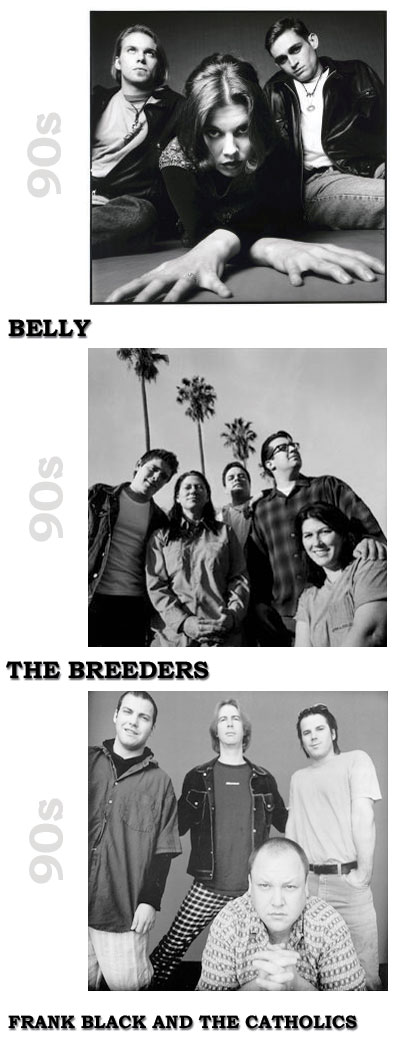
Kim Deal found more involvement in the aftermath of The Pixies’ influence over rock and roll than any other member of the band. After the breakup of The Pixies she joined the band Belly which took a major part in the beginning of the adoption of The Pixies’ sound throughout the rest of rock and roll. This band definitely was quite obviously influenced by The Pixies internally through its lyrics and externally because of its association with the commercial label of alternative music.
Leaving Belly Deal went on to form The Breeders with her twin sister Kelly. The Breeders returned to many elements of the sound of The Pixies and did more in spreading that aesthetic in the early nineties. Deal was the other main force in The Pixies and her desire to have more involvement in the song writing and singing led to The Pixies’ demise, so it is no surprise that the band she fronted afterwards was similar in sound ideal. She formed an incredibly short-lived band call The Amps which released one album Pacer before
dissolving. The last The Breeders album, Title TK, was released in 2002.
By 2001, though, the importance of The Pixies as a pedestal of more than a decade of rock and popular music was quite obvious to even casual listeners. The band topped the lists of favourites of those who could only have enjoyed the work of Sharon, Lois, and Bram at the time the band was still together. People from the teens to the fifties recognized them for their importance; more importantly a continuing cavalcade of current musical acts recognized and acknowledged their influence. And so, in 2004 the band reunited for a tour which was at once a critical, financial, and fan success, touring with contemporary supporting acts who were influenced by them.
“Nimrod Son” and its sister songs on Come on Pilgrim as well as the songs in the same vein from Surfer Rosa spread quickly throughout rock music and had a heavy influence on it. “Nimrod Son” expanded, unwittingly I think, upon previous forms and ideals from the underground, adding to them until it created something different yet accessible to listeners. The ability to internalize other styles of music, as in “Nimrod Son,” without becoming a strange melange of different musics became a staple of later alternative music as did the wide progression of dynamics. “Nimrod Son” stands, upon analysis, as one of the definitive sources of the music of the early nineties, the commercialization of such music in contemporary culture, and the basis of a vast swath of contemporary musical groups. In total, the rock music scene today would not exist without The Pixies.

Hey Mouthbreathers,
Why you gotta make fun of people all the time? You used to be so awesome with all the naked chicks and articles about what the government is hiding from us. You sold out dudes. You just took all that money you got and ran. It’s magazines like you that ruin it for everyone else when you could do great stuff. I hope you all catch on fire and that thing that happens when people catch on fire happens to you.
Simon Enderby
Pylon, PL
Esteemed Editors,
I tried to teach myself long division, but it makes no sense. Okay, first you already have to know how to do division, before you even start. Not only that, but you have to do subtraction at the same time to find out how many units are left over. Then you ignore those units. Next you have to do more subtraction and, mysteriously, move one number down from the number from which you’re trying to divide. This is repeated until one receives an incorrect answer, at which point one scribbles out the math and figures it out in one’s head. Long division is completely stupid.
Henry Wolkowicz
Waterloo, Ontario
Dear Axes & Alleys,
For several years now I have visited many different libraries throughout the world, each of which features books. Some of these books are on the subject of geography while others explain about kites and kite history. When building a kite, it is important to remember about wind currents and strings, in that a kite functions as the opposite of a marionette puppet. One floats on strings and other hangs on string. That reminds me of the delicious snack of string cheese. Since when did cheese become bad for you? It makes me wonder, because all this nonsense about cholesterol makes me shiver on cold nights. Those nights make me wonder about the phrase “why be a human being when you could be a human doing.” And what I intend to do is read a book about string.
William “Billy” Corgan
Chicago, IL
Dear Ms. D.R. Grunion,
It has come to my attention that Charles III was never recognized as a legitimate king of England, which I think is unfortunate, because I have a number of official Charles III collectors’ coins that I got from a pizza restaurant. It seems that now these are worthless. Oh well, I suppose I’ll just put them in the drawer with the rest of my pretender coins.
Michelle Turring
Woodside, NY
To the Editors,
Why does Axes & Alleys, the world’s premier tractor repair and maintenance magazine, not publish an article with accurate information and beautiful pictures of glowfish? Glowfish are an amazing denizen of the aquatic depths. And they glow in the dark! That’s absolutely amazing and I think that a lot of people would be interested in knowing more about glowfish. Why not give the people what they want? The people want to know about glowfish and see glowfish pictures. Sure, glowfish are just something I made up, but still, how is anyone going to learn about my imaginary glowing ichthyoids without you writing about them. Glowfish are cool. They glow and they’re fish! Glowfish.
Euripides Smith, Jr.
Moscow, Russia.
Dear Axes & Alleys,
Your article on history was really offensive. The name of G-d was spelled out several times.
Lister Bertenberg
Tel Aviv, Israel
Dear Axes & Alleys,
It’s so cool. I’m up all high and can even see my house from here. Amazing.
Erin Pigiron
Toronto, Canada
Dear Axes & Alleys,
I recently ordered two double packs of your super-cheesy pinto bean salad concentrate. I am incredibly unhappy with your first foray into the consumer goods sector of the economy.
Betsy Constable
Hanna, PL
To the editors,
I was incredibly upset that I received your Arab-language version in the mails the other day. I am also quite dubious as to your claims to publish a Linear A version of the magazine.
C.R. Floyd
Cambridge, UK
Dear Axes & Alleys,
Could you please tell me who the young woman in your fire escape sticker is (Volume 456-BR8, Issue 07)? I think she’s totally tubular and I also enjoy fire escapes. Unless she’s clip art. In which case it would be really pointless to get her name since it’s probably just some file name like DSC389543.jpg. Unless you use .png, of course. Please tell me you don’t use .gif, though.
Albermarle Johnson
Pembroke, ID

Here at Axes & Alleys, we understand that there were nine great inventions that truly changed the world; gunpowder, movable type printing, the stirrup, writing, the steam engine, agriculture, digital encoding, the compass, and smelting. And, of course, all of these inventions were created for one reason: to impress girls.
Of course, there’s one girl that definitely deserves to be impressed and that girl is none other than Ms. Anne Craig. Each morning, she spreads cheer through her job and we, the Axes & Alleys editorial staff, think that people should try to invent new things to impress Anne Craig.
Think of what humanity could create; flying cars, jet packs, laser blasters, spaceships, a cure for cancer, robots and what not. There would be so many benefits to humanity if our current would-be Thomas Edisons would get off their collective asses and start trying to impress Anne Craig. C’mon, inventors, let’s get cracking.
xxx ooo
Delores R. Grunion
Editor-in-Chief

Like all good Americans, the lovely Kate Winslet is a British Actress.