The World of Histronomy

With Dr. Scott G. Birdseye
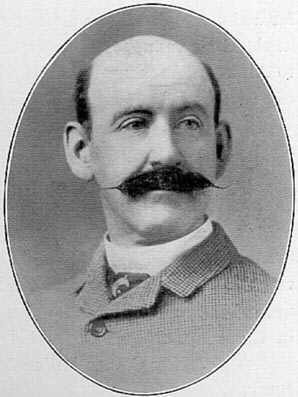
Scott Birdseye is a professor at the world-renown Botham
University in Himmot, Accadia. Throughout his life he has
traveled to various countries, written various things and
seen up to seven different types of brickwork. He does not
enjoy mushrooms; both the flavor and the texture; in his
opinion, are entire unappetizing.

On the Subject of Forts and Fort-Like-Things

Just as weapons can be divided into two distinct classes: shock and missile, so can military tactics be divided into two different categories: the light, fast and maneuverable and the heavily armored yet. There are abundant examples in the history of warfare of instances wherein different categories of weapon or soldier were able to claim supremacy of the field, whether shock troops such as the Medieval knight, missile troops such as the longbow, or fast, light troops such as guerrilla fighters. Each specific attribute provides both strengths and weaknesses, as is the case with heavily armored yet slow troops, an example of the sacrifice of mobility for protection. The ultimate example of this sacrifice is the permanent fortification.

Completely lacking mobility, permanent fortifications, though their imposing strength could prove themselves nearly impossible to capture, producing a system of combat dominated by the prolonged siege. Although the development of artillery caused the decline of the castle system, it also generated the invention of new forms of fortification, typified by the works of French engineer Vauban, whose contributions to the art of defensive construction and siege-craft would dominate that field for nearly three hundred years.

The system of permanent fortifications for military defense is as old as recorded civilization. The earliest stone wall structures of Asia Minor and the Southern Caucuses slowly developed over thousands of years into the architectural marvels of the massive walled cities of Classical Greece and Rome. Forming the basis of the early Medieval permanent fortification, the city wall concept dominated the field of strategic defenses until the later rise of the Norman military concepts. The Franks and Normans were the first group in Europe to modify the non-permanent wooden mot and bailey design into the permanent stone castle concept, which was a direct response to Viking coastal raids. Soon after their development, castles began to dominate the military landscape of Europe, which was, in the Middle Ages, under constant threat of internal war and external attacks by Vikings, Mongols, Muslims and others.

With imposing size and simple basic design, the castle was popular with Medieval nobles. Castle walls were generally about fifteen to twenty feet thick and used height as a defense against scaling and mining, two of the prominent siege tactics of the time. The strength of castles depended not only on their size, but also on the relative weakness of the available siege weapons. Economics also added to the defense strength of castles, as prolonged sieges were often too expensive for Medieval feudal lords, thus insuring the near invulnerability of castle defenses.


Continue reading

A Special Editorial

The Crucible of Silver

by Noted Rail and Oil Party Cantidate Katie-Harrison Gargoyle

I would be presumptuous, indeed, to present myself against the distinguished gentlemen to whom you have listened if this were a mere measuring of abilities; but this is not a contest between persons. The humblest Robber Barron in all the land, when clad in the armor of a righteous cause, is stronger than all the farmers of error. I come to speak to you in defence of a cause as holy as the cause of liberty — the cause of The Gold Standard.

In 1904, the white men of this Nation will select our next President, and it is on this occasion that I must offer forth grave warning of the desolation which shall be brought about if that Pugilistic Poacher Mr. Roosevelt of New York is once again to have power thrust so ignobly upon him.

Nay! Let not America melt herself into the Crucible of Silver! We shall not abandon the Gold Standard which has brought about so noble a Nation from such a verdant land, which the savage Red Man had let go to waste.

Must the Rail Road Tycoons who unite our cities with their endless lines, and the Oil Barons who fuel our great Mother Industry be made to suffer at the whims of those idle and wretched dirt farmers in the West, who out of jealousy, seek to destroy the Bankers and Barons of the prosperous East with its wealth that Providence has provided?

These dirt farming vagabonds desire a devaluation of the dollar so as so escape the interest payments on their loans. I suppose that they must hold to the belief that Bankers need to feed their children’s hungry mouths.
Perhaps these farmers sought out loans only so that they could strike against the industrious Bankers, Oilmen and Railroaders of the East, so as to destroy Mother America, leading our proud Nation into the depths of filthy poverty, moral decay and wretched abasement.

My friends, we declare that this Nation’s Industrialists are able to legislate for their own people on every question, without waiting for the aid or consent of any other class, especially the working classes who are indeed drowned in sinful poverty. It is the issue of 1776 over again. Our ancestors, when but three millions in number had the courage to declare their political domination over the poor of the earth. Are we, their descendants, when we have grown to two hundred and seventy millions, going to declare that we are less independent than our forefathers?

No, my friends, that will never be the verdict of our Nation’s great Industrial Plutocrats. Therefore, we care not upon what lines the battle is fought. If they dare to come out in the open field and defend this so called working-classism as a good thing, we will fight them to the uttermost. Having behind us the Wealthy and Mustachioed Autocratic Rulers of this Nation and the world, supported by the Commercial interests, the Rail Road interests and the Bankers everywhere, we will answer their demand for this currency devaluation by saying to them: You shall not press down upon the brow of the Industry this crown of thorns, you shall not melt America in this crucible of silver.

So, let us put forth our support of the Gold Standard and waive that banner aloft. Vote for the Rail and Oil Party, the party of the true American.

Poetry from the Master

H.G. Peterson is a world-wide literary phenomenon
as well as being inventor of the extra-super collider.

Inundation of Shame, Part I

There are a dozen little building bricks
For of quarks and leptons there are each six
Quarks come in their flavors, there are three pairs
Up-Down, Strange-Charmed, and Top-Bottom are there
Now the six leptons you have in this batch
Each has a neutrino type that they match
The electron, muon, tau are the three
These with their partners all six leptons be

There’s a group like these with opposite charge
Though their numbers are not very large
These are the antiparticles, you see
They do not make up things like you and me
But when matter and anti-matter meet
They blow up each other which is quite neat
There may also be sparticles somewhere
That’s not proven so you don’t need to care

That’s what makes up matter, like dogs and suns
They are called fermions isn’t that fun?

Inundation of Shame, Part II

Matter alone doesn’t the cosmos comprise
There’s energy too, in four-forcéd guise
Electromagnetism is a force
And gravity is also one of course
Two nuclear forces, the strong and weak
Round out the four forces of which we speak
Yet perhaps they are all one and the same
If one figures that out, they’ll get much fame

You know forces come from particles too
Ws, Z, and eight gluons that glue
Photons make up light, we can’t leave them out
So that there are twelve, or so there about
These particles can pop in from nowhere
And disappear again, without a care
Larger they are, the less time they are here
Stronger forces only work when they’re near

These force particles, bosons they are known
Make the sun shine and spin like a cyclone

Interesting Bits for Learned Gentlemen

Rommel Best Looking WWII Leader

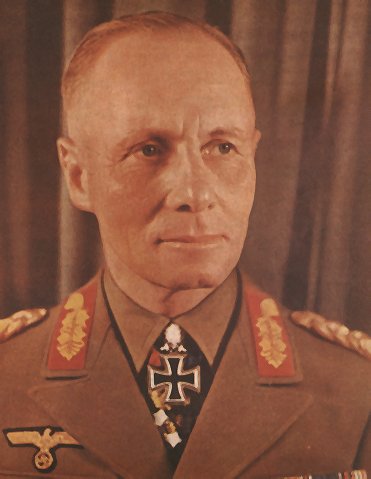
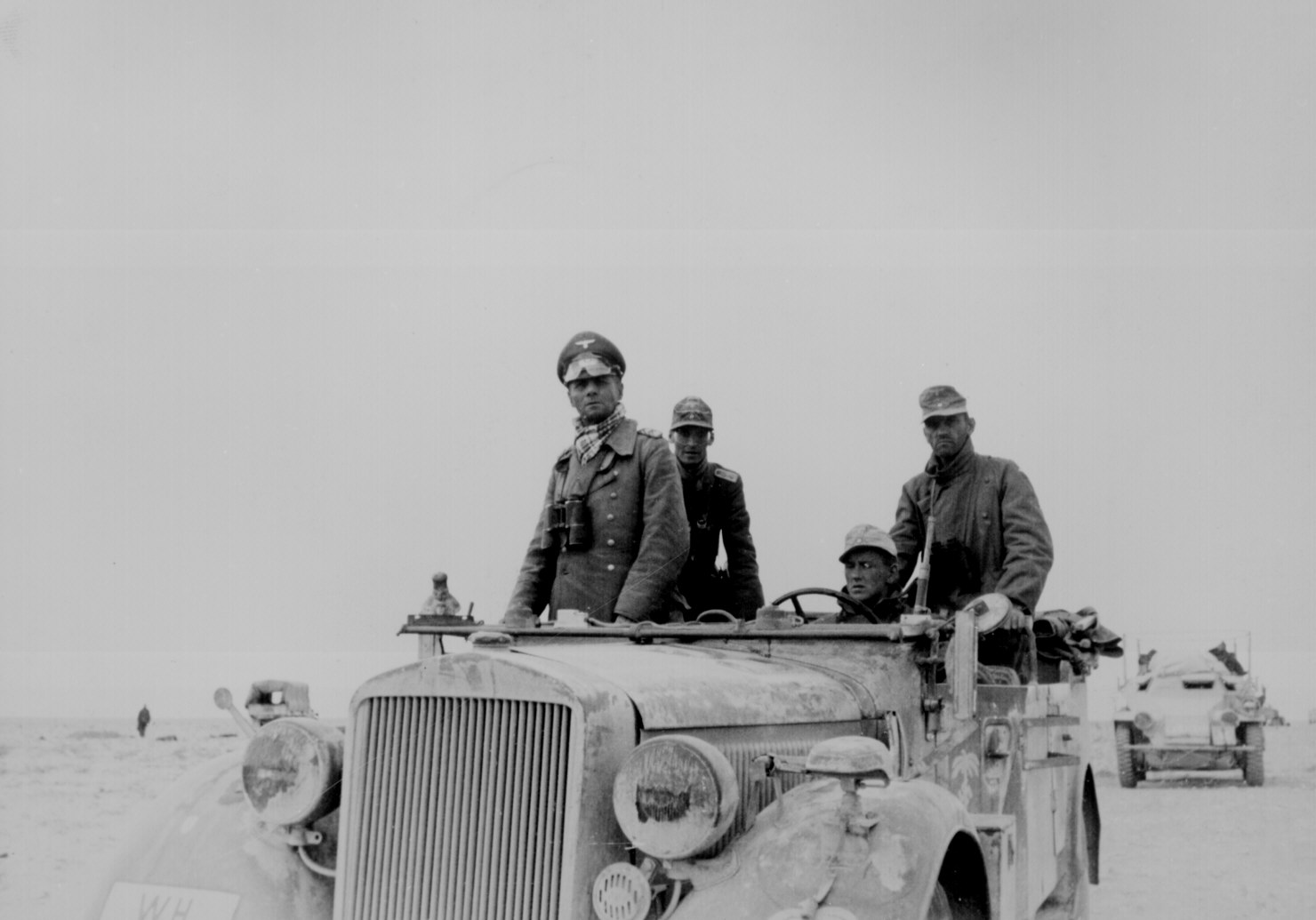
At their annual summit last month, the Ancient Guild of World Historians released new findings which indicated that German Field Marshal Erwin “The Desert Fox” Rommel was by far the most handsome military leader of the Second World War.

Not only, the Historians say, was Rommel tall, strong and striking in his full Field Marshal uniform, but he had the piercing eyes of a poet; at once soulful and powerful. Other parts of the release referred to the Marshal as “dreamy, keen and stoic in very cool way.” Although Rommel was unable to defeat Patton and Montgomery in North Africa nor overcome the Allies in the Battle of the Bulge, he looked so beautiful when the sunlight hit his long eyelashes, giving them a glittery appearance. Also noted were his well built arms, strong legs and firm buttocks, all well accentuated by the crisp lines of his always well maintained and resplendent uniform.

Historian (Second Order of the Griffin) Doctor Hubert Van Tuyll stated “Many of the generals of World War II were down right homely; Montgomery was a skinny little man with a big nose and beady eyes, while Omar Bradley just looked like a potato with glasses. Without a doubt, Rommel is by far the most handsome of the lot.”

American General and future president Eisenhower was generally given second place, although historians were quick to note that his was a more boyish look, while Rommel had a much more manly handsomeness. The Historians did note, however, that most of the leaders of the Second World War were older, often grizzled men, the really attractive people during that time were the young soldiers; ruddy and tanned barrel-chested young lads fresh from muscle-building farm labor and crisp and striking in their new uniforms.

General Ranking:

Most Handsome:
Erwin Rommel (Germany)
Dwight David Eisenhower (United States)
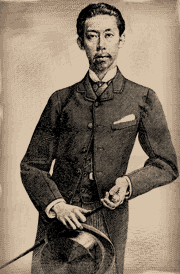
Ozawa Jisaburo (Japan)
Douglas MacArthur (United States)
Georgi Zhukov (Soviet Union)

Least Handsome:
Omar Bradley (United States)
Benito Mussilini (Italy)
Nikita Kruschev (Soviet Union)
Henrich Himmler (Germany)
Charles De Gaulle (France)