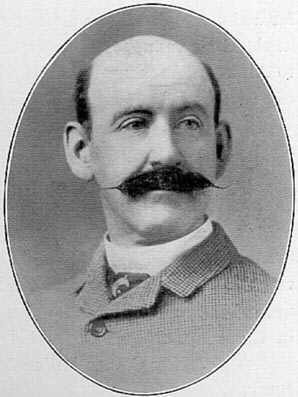
Advice from Beyond the Grave!
This month’s “Ask Montezuma” will be written by guest-columnist Montezuma I, as Montezuma II, wife Trudy and their children are taking a much-deserved vacation in Asia.

Montezuma dispenses advice every week
on his National Public Radio program Mentor-
Montey, which can also be heard on Radio
Free Bulgaria.
Dear Montezuma,
My Mom and Dad have been planning on buying me a pony for the last three years. I’m only six years old and I don’t want a pony, I want a Steven Wolfram cellular automata set with the French Riviera play set. I even wrote to Dr. Wolfram, but he never answered my email or my letter. Once I saw him on TV and he picked his nose. It’s funny to think of this famous brain guy sitting in the bathroom, thinking up a new kind of science. I do that sometimes. Am I going to have a little brother or a little sister?
Mondays Are Really Yesterday
Mary,
What in the blazes are you going on about? First it’s the stupid pony, then you go on selfishly about some washed up MacArthur genius. Since when did “Dr.” Wolfram get involved with Mattel anyway? So you wrote the guy? Big deal. I write people all the time. Look at me now, I’m writing to you. You’re pretty stupid for a six year old. You’re probably not done picking your own nose yet. I can’t even make sense of your letter.
Oh Montezuma,
Please don’t shoot the messenger here but I have a dumb question about Legionnaire’s Disease. I currently work for a company I shall not specify and we have recently issued a corporate policy on Legionella, the bacterium which causes Legionnaire’s Disease. My question regards tropical fish tanks. The water temperature 22C – 45C. Some rather gross sediment has built up on the bottom of the tank. That tank is an optimal place for nutrients feeding bacterial growth. As you know, probably, water condenses and evaporates, but the tank recirculates the water. I don’t know the volume of water in the tanks because they’re all different, so if you need to know that, just let me know. A lot of these tanks are at nursing homes, so a lot of old people are put at risk. Obviously this tank is the perfect place for Legionella to thrive! Give me some peace of mind here.
Robert U. Belknapp, New York
Rube,
I’ll give you some piece of mind and a bullet, to boot. Why the hell are you asking me? You’re the expert, apparently. I don’t even know what a legionella is. You build up all this talk of some awful disease and then throw the fish tank thing at me. Now I’ve got a wonderful description of some god-awful fish tank in the middle of wrinkly old farts who can’t wipe themselves. And if I were going to answer your mongoloid question, it would be nice if you took the time to find out the volume of water in the tanks. You’ve read the magazine, you know the format for the column and you leave out what might be a critical piece of information. I ought to slap you.

Dearest Montezuma,
Why is the sky blue?
Ornithal Jones,
Aged 44
Orny, Well, looking up at it, I’d say it’s a nice shade of black right now. You’re probably thinking during that day time part of the day. Well, I don’t usually see the bright side of sunrise, so I couldn’t tell you. However, I can take a whack at figuring out why the sky is black. As I see it now, it’s black because it’s got a black color to it. So, I would assume that during the day it’s blue (if it is blue) because the sky is colored blue. Now that I think about it, the colors could just be painted on the back of your eyeball to make the sky look like that. I’m really the wrong person to ask, but hey, you have a good one.
Dear Montezuma,
Why did Kiley never call me and ignore me that one night after she was all flirty two days earlier.
Albert Redmon Nadler Isaac Edmonds
Arnie,
That was so not an anonymous letter. I just told you yesterday I was going to be covering this gig. And that fake name really sucks. I figured it out right away. Anyway, I don’t know why she didn’t call you. Probably because you only really saw her the once when you guys were drunk. There was obvious chemistry before you got drunk, but then you only saw each other the once. Like you said, the second time you saw her she was performing and all and it was a birthday party for her friend. You just met, so she was probably running around taking care of that. And you didn’t make any effort after that. I would’ve. She was hot, guy. Of course, it could’ve been your smelly feet. I think that was the week you lost your pumice.

Dear Montezuma,
Recently I was dining at a well known establishment, when my wife hit me with the difficult news that she wanted to get a divorce. I’m not really sure how this started. Back when we first met at Canasta Camp, we hit it off perfectly, bonding over our love of Dutch Cuisine, Canadian horror movies, the color mauve, and of course canasta. Our early time together was just magical and, dare I say it, perfect. We were wed after dating for a few years, and while we had a couple of fights during these times, they were of short duration and quickly resolved. Barely did we ever have trouble. After marriage, we got along even better, or so it seemed. Sure, there were difficulties; the time she wrecked my car after running a stop sign, it was so clearly her fault and she refused to admit it, even after the police report, the civil suit and all of that. I just wanted an apology for wrecking my car, but she said that I should apologize for not supporting her. I’m all for supporting her, but it was a difficult time for us both. Then, the next month, she accused me of wanting to cheat on her because I checked out this girl at the WalMart. Then, she threw all this stuff at me, claiming that I flirted too much with my co-workers and with the check out girl down at the supermarket. I think she was just trying to justify her own thoughts of cheating, and I told her that and she got really mad and stormed out. Later that night she came back drunk and I told her that it was irresponsible for her to drive drunk, but she claimed that she had only had a couple of drinks and was fine. I claimed that it wasn’t the amount of alcohol that mattered, it was the whole situation. You shouldn’t get behind the wheel if you’ve been drinking, period. Sure, I could have spent more time doing things that she enjoyed, but I do really think that she’s got a crush on this guy at her new work. See, she changed jobs a couple of months ago and keeps telling me stories about this guy Charlie there. She shrugs it off and even jokes about wanting to have sex with him, and that hurt me. So, last week after I dropped by her office to bring her lunch to her, I caught her seriously flirting with the guy. Yeah, I did a rash thing. I yelled at her in front of her co-workers and caused a bit of a scene. That was a little harsh and probably embarrassing for her, but for Christ’s sake, she was sitting in the guy’s lap. At work. They were all up on each other, their faces like four inches apart and they were both giggling. It was too much. And to top it all off, now my damn lawn mower won’t start anymore and my car’s still got a big dent in the right fender. What should I do about this whole mess I’ve made of my life?
Entropy Only Now
Dear Eon,
Hey, man, that’s pretty rough. Especially, you know, the fact you probably had your dinner ruined. I’m kind of curious if she dropped “da bom” after the appetizers. If you dig Dutch cuisine, you know that bad news isn’t cool right before the main course. Look on the bright side, dude. She might have just had a bad seafood mixer plate or something. And don’t forget that Dutch beer. Maybe she hadn’t eaten all day. I’d try dressing real provocative-like and crawling into bed with her. That usually works.
Montezuma II will return next month, with all new advice for the world’s confused masses of rabble.