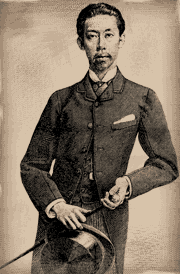
With Dr. Scott G. Birdseye
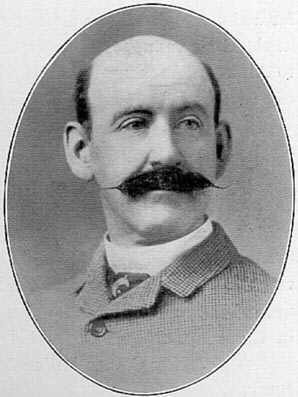
Scott Birdseye is a professor at the world-renown Botham
University in Himmot, Accadia. Throughout his life he has
traveled to various countries, written various things and
seen up to seven different types of brickwork. He does not
enjoy mushrooms; both the flavor and the texture; in his
opinion, are entire unappetizing.
On the Subject of Forts and Fort-Like-Things
Just as weapons can be divided into two distinct classes: shock and missile, so can military tactics be divided into two different categories: the light, fast and maneuverable and the heavily armored yet. There are abundant examples in the history of warfare of instances wherein different categories of weapon or soldier were able to claim supremacy of the field, whether shock troops such as the Medieval knight, missile troops such as the longbow, or fast, light troops such as guerrilla fighters. Each specific attribute provides both strengths and weaknesses, as is the case with heavily armored yet slow troops, an example of the sacrifice of mobility for protection. The ultimate example of this sacrifice is the permanent fortification.
Completely lacking mobility, permanent fortifications, though their imposing strength could prove themselves nearly impossible to capture, producing a system of combat dominated by the prolonged siege. Although the development of artillery caused the decline of the castle system, it also generated the invention of new forms of fortification, typified by the works of French engineer Vauban, whose contributions to the art of defensive construction and siege-craft would dominate that field for nearly three hundred years.
The system of permanent fortifications for military defense is as old as recorded civilization. The earliest stone wall structures of Asia Minor and the Southern Caucuses slowly developed over thousands of years into the architectural marvels of the massive walled cities of Classical Greece and Rome. Forming the basis of the early Medieval permanent fortification, the city wall concept dominated the field of strategic defenses until the later rise of the Norman military concepts. The Franks and Normans were the first group in Europe to modify the non-permanent wooden mot and bailey design into the permanent stone castle concept, which was a direct response to Viking coastal raids. Soon after their development, castles began to dominate the military landscape of Europe, which was, in the Middle Ages, under constant threat of internal war and external attacks by Vikings, Mongols, Muslims and others.
With imposing size and simple basic design, the castle was popular with Medieval nobles. Castle walls were generally about fifteen to twenty feet thick and used height as a defense against scaling and mining, two of the prominent siege tactics of the time. The strength of castles depended not only on their size, but also on the relative weakness of the available siege weapons. Economics also added to the defense strength of castles, as prolonged sieges were often too expensive for Medieval feudal lords, thus insuring the near invulnerability of castle defenses.