
Book
Reply

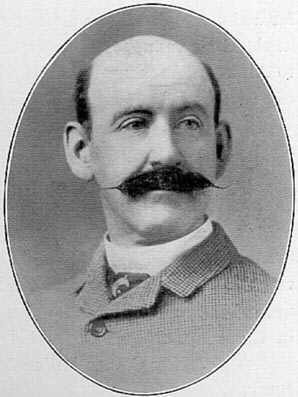
Dr. Scott Birdseye is the world’sforemost autodidact.
His manyworks include the notable tomes The Deities’ Chariots
and Deities from the Cosmos.
European society in the Middle Ages was dominated by a rigid structure which dictated nearly ever aspect of the people’s lives. This arrangement held the most power over the lives of the society’s lowest strata and thus, for the common laborers, life was defined by monotony and the endless struggle of physical existence. These aspects of peasant life on the manor are most evidently illustrated by the details of the commoners’ diet.
Peasants’ lives revolved around not only the ever continual production of food, but also around the necessity to meet the basic needs of survival. Thus, food was the central element in the lives of the peasants, acting as both their occupation and sustenance. Agricultural production was the singular purpose of the lives of the Medieval peasantry in Europe. The population of the Middle Ages was stratified into three major groupings: the nobility, the clergy and the laborers, although there were many other groups such as merchants and craftsmen whose roles did not fit with this concept.
Within the three major ranks of occupation, the nobility, whose place was to provide defense, and the clergy, who focussed on matters of religion and learning, were together only a small percentage of the population as a whole. The majority of the people were classified as Laboratores, commonly called peasants or serfs. It was the duty of the peasants to provide the actual labor which allowed the other divisions of society to exist. Thus, the life of the Medieval peasant consisted entirely of performing the tasks of farming; producing foodstuffs and other agricultural goods.
The Manor System provided for the organization of peasant labor output in Medieval Europe. The manor acted as a relatively self-contained agricultural unit, consisting of peasant homes clustered into small villages, plow lands, pastures, forests, water supplies such as rivers, streams and ponds, and the manor house, home of the manor lord, the noble land holder who ruled over the entire unit. While the primary purpose was to provide food, the manor also functioned as an economic entity to provide labor management and to produce a profit for the land holding lord. A system of mutual responsibility governed the manor; in exchange for labor the lord was expected to treat the peasants properly and not over work them. The lord was also expected not only to provide protection to the peasants as well as gifts on special occasions, but also to act as a mediator, judge and political and legal authority over his holdings.
Although the lord did provide protection and maintenance of social order, peasant life on the manor was fraught with difficulty and mired by monotony. In no way were these extremes more evident than in the peasant diet. Food on the manor was limited by what the land could provide, and for the most part, variety was unknown to the Medieval peasantry.

The diet of the commoners was essentially vegetarian and depended upon the staple crops of the particular geographical location. The most common crops were the cereals: wheat, oats, rye, and barley. Garden crops, which were cultivated on a much smaller scale, included vetches, beans, peas, onions, beets and lettuce, all of which provided some supplement to the daily menu. The most common vegetable products in Northern Europe were the cabbage and the turnip, while in the south olives and grapes were also privately grown. Despite these slight supplements, the peasants’ diet consisted mostly of grain, cooked into gruel, porridge, or coarse black bread made from rye, oats or barley.
Wheat bread was, for the most part, eaten only by the nobility. Daily fare for the commoners was often pottage, a dish which contained mostly barley or oats with some vegetables, which were slowly cooked in a large pot over the course of the entire day. Flavoring was sparse and rarely available to the peasants, although wild mustard seed, poppies and wild honey were occasionally used for seasoning, as was olive oil in Southern Europe. Pottage was usually eaten later in the day, so morning meals usually consisted of nothing more than bread and beer. The only available beverage for the Medieval peasantry was beer, which was brewed, without hops, in nearly every village. In Southern Europe wine of poorer quality was a common drink for peasants where beer was not available.
Dairy products such as cheese, eggs and butter were common in the Medieval world, although they were not always available for the peasants. Generally, sheep and goat products were the only diary foods available to the peasants, as bovine milk was reserved primarily for the nobles, although eggs were available to peasants in a limited manner. Meat was almost entirely unknown to most peasants, except at special occasions. Although many peasants raised chicken and sheep, eggs and wool were generally more valuable than meat, although older, less productive animals could be slaughtered for food.
Wild game unclaimed by the lord, which usually consisted of very small birds and fish, could also provide some meat for the laborers. As salt was both rare and expensive, peasants soaked what meat they had in lye to prevent spoilage. Despite this, meat was a rare thing in the average peasant’s life, seen only on the most important of holidays. In many ways, the calendar dictated the diet of the manor’s peasants. Although the calendar year defined the important agricultural tasks and labors, it also defined the significant holidays, feasts, and celebrations, occasions which provided the only available breaks from the tiresome monotony of the peasants’ lives.

The Lenten Breakfast, a feast which coincided with Easter was an important event in the peasants’ year. Following the penitence of Lent, the lord was expected to provide a sheep or a pig for the peasants’ observance of the feast. Martinmas was another important occasion on the manor, which peasants celebrated by slaughtering their oldest, weakest ox to provide meat for the long winter. Special events also provided peasants an opportunity to drink wine and eat wheat bread while performing the sacrament of communion. Peasants were often forbidden from taking communion more than once a year.
Manorial lords often tried to limit observance of holy days to no more than four a year, in order to keep peasants at work, but also because the lord was often expected to provide extra food for holy day feasts. Even with holiday feasts and gifts from the lord, food was always scarce for peasants, and starvation was terribly common especially during the long winter months. All year round, life for the peasants was difficult and tedious, and the few circumstances which provided any relief were fully appreciated.
In the fourteenth century, the epidemics and plagues which had ravished Europe reached their deadly crescendo, culminating in the waves of Black Death which swept across Europe erasing entire villages. A large portion of the population of Europe died from the outbreaks of plague in the mid-fourteenth century, including a great many peasants. Without readily available peasant labor, the manorial system began to decline, heralding the rise of the political and economic power of the cities. As the dominance of the manor disappeared, the agricultural system of Europe was forever altered, although the lives and diet of Europe’s common laborers changed little, although the later Middle Ages did see the rise and proliferation of taverns and other organized establishments which did cause some changes to diet.
Though diet may seem an unimportant aspect of the Medieval world, diet was in some ways an important avenue for social, cultural and political change. Spices, used to season food, were one of the main commodities traded with the East, and it was the search for new spice trading routes which provided one of the main incentives for the expansions of the later Age of Discovery. Though in later centuries, many changes in society impacted and changed diet, for the peasants of the Medieval manor, their diet was similar to their lives; bland, boring and monotonous.
A Look at the Adventure of Following the 613 in Space

Jerusalem 5: Israel’s new space station is our last best hope for Shalom!
As humanity moves further into the Space Age, the burden will be upon us evermore so to redefine our cultural traditions for the new environment of the Void. As we explore the stars, so must we reëxplore ourselves.
Of utmost import to me today are the 613 commandments which Jews are obligated to practice. I’ve used a fine Pre-Ciso knife to whittle down the list to a few choice items. Earlier, I took the opportunity to sit down with three leading Rabbinical authorities to discuss the challenges inherent to the prospect of Jewry in Space, specifically the practice of the 613 Mitzvot.
Though they differed on many key points, as Rabbis often do, they agreed that tradition must not be forgotten; indeed our cultural legacies are perhaps the most important cargo we will collectively stow away for our long voyage into the Universe.

Rabbi Menachem Schmileson started the Rabbinical Institute for the U.S. Department of the Navy during World War II and has been at the forefront of the automated bris movement since 1962. While there have been some recent problems with the fourth generation of robotic circumcision equipment, stock in Mecha-Snip! LLC has skyrocketed.

Rabbi Jared Schmendelson is a graduate of the Yeshiva Gran Tourismo in Milan, Italy and specializes in practical applications of the Torah in the formula 1 racing circuit and has published many papers on the transmission of the Talmud via quantum entanglement. He is currently rabbi-in-residence at the Art Nouveaux Reform Temple in Charlotte, NC.
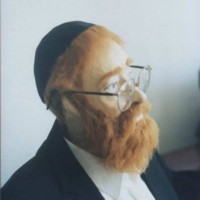
Rabbi Ahuva Zusman Keshet was the only Ultra-Orthodox scholar willing to participate in this forum. He did not offer any biographical information, but he has a wonderful felt hat.
And Now the Discussion
Jews are commanded to affix a mezuzah (a small prayer scroll in a case) to the doorpost of their home. Obviously this would not apply to a temporary dwelling such as a space ship. However, we currently have an International Space Station in orbit. What is the proper place in which to affix a mezuzah in the ISS?
Schmileson: Well, the ISS has airlocks, not doors, so while it is an entrance, it has no doorposts. Furthermore, it’s a modular system. So let’s say you put the mezuzah in one module and it’s connected to another. Which way is in and which way is out? My solution would be to place a mezuzah on both sides of the airlock.
Schmendelson: Clearly a mezuzah belongs on the main access hatchway, however the main living compartment also contains a toilet facility, which makes it a space used for unclean actions. A mezuzah on the main access hatchway is the only reasonable place.
Keshet: Jews should not live in the space station.
Jews are commanded to recite the Shema every morning and every night. How could this be accomplished in orbit or in an interplanetary spaceship, where night and day do not necessarily apply?
Schmendelson: The mission time is set at the launch point of the aircraft for orbital missions. Day and night should be judged according to that time on the ISS. As for an orbital mission, the same general time applies. For a journey to another planet or star, it becomes debatable. The launch facility time should be used until halfway through the mission, then the time at the place of landing or orbit should be used for the other half.
Keshet: Jews should not travel in space.
Schmileson: The most appropriate time is the time in Jerusalem for interplanetary expeditions. Once arrived, the day and night cycle will be completely different. G-d did not command us to observe our circadian rhythms, but the Days and Nights. When on another planet, the rising and setting of the Sun as seen from that planet should be used. While I’m sure G-d would appreciate the Shema twice every 90 minutes, he knows that such blessing would detract from the temporal mission. It’s best to follow mission time.
There is also a commandment not to leave a beast which has fallen beneath its burden unaided. Positing that the vessel in which one travels through the Void is such a beast, what should an observant Jew do in a vessel which is in danger?
Keshet: Spaceships and space stations are not beasts. Jews should not be in them, on them or around them.
Schmileson: Absurd. Totally absurd. Vessels are obviously not beasts. Would you have sailors tend to their ships as animals?
Schmendelson: Sailors tend to treat their vessels as being alive and thus with care. The same could be said of a void-traversing vessel, which provides more life and sustenance for the traveler than any surface vessel. Care should be taken to meet the needs of the ship.
Let’s say you’re traveling with an Ammonite or a Moabite.
Schmileson: There are no more of those people.
Okay. You colonize the planet and only have a daughter, while a Gentile has a son. These are the only progeny. How do you continue the colony?
Schmendelson:If there is a Gentile who does not convert, I would say the special circumstances allow the union, but not if it be forced. How is the seed of Israel to continue in the stars?
Schmileson: Jews should not travel with gentiles, but in such a case I would say smite the Moabite or Ammonite and impress upon the Gentile to convert. If this does not happen, artificial insemination would be appropriate if everyone cared for the ensuing children. However, Jews don’t belong in space, so the question is moot.
Keshet: The colony should never have started.
Jews are not supposed to work on the Sabbath (and other holidays). How is this accomplished in an environment where mere existence is and relies upon work?
Schmendelson: If you cannot live without the work you must do daily I feel it’s the same as the accommodations made to those who are too frail or unhealthy to not eat on days where Jews fast, like Yom Kippur. If not maintaining the space craft or station will endanger your life, you may continue to work.
Schmileson: That sounds Kosher to me.
Keshet: Yet another reason why the Void is no place for Jews.

What about eating organisms on another planet? Certainly if there are creatures on another world they will be significantly different from those on Earth. What is the far-flung traveler to do?
Schmileson: That is particularly un-Kosher. The expedition should bring enough supplies with it for the duration of its stay. If a colony is planned, I suppose a trained Rabbi should be sent along to decide what’s Kashrut. One should hope that there are ruminants or cloven hooved creatures on the colony world.
Keshet: You just keep proving my point. If your daddy was circumcised and wore a yarmulke, don’t step off-planet.
Schmendelson: I would say that under the circumstances, of which there are many different ones, alien creatures could be eaten if lives were at stake, but every effort should be made to bring along that which is needed to survive.
Now, you’re not to possess inaccurate scales or weights. How does a Jew conducting business in space or on another planet do so properly?
Schmileson: That’s pretty simple. Just recalibrate your instruments to work on the other planet. Modern technology is quite useful, just don’t do it on the Sabbath (and charge interest).
Schmendelson: If you’re traveling to many different worlds, it may become difficult to carry the proper weights and scales. I would suggest that any businessmen not deal goods while traversing the Void.
At this point Rabbi Keshet left the Kosher deli in which we were having our discussion. I’ve not heard from him since, but he left his hat, so if anyone knows where he is make sure to drop us a line.

Men and women are exhorted not to wear the clothing of the other. How does this apply to spacesuits, which were originally worn by men?
Schmileson: Spacesuits can be considered tools and not clothing, therefore it does not matter who wears them. As for the coveralls worn underneath, these are not intended for people of either sex, so may be worn by both without problem.
Schmendelson: I’m sure as the human presence in space grows, people will come to treat spacesuits as a fashion statement. As such, a man should not wear a woman’s spacesuit or vice versa, as it will be a personal exhibition of that person’s cultural mores.
Finally, there are several injunctions against letting an uncircumcised person touch holy things. What if aliens do not have penises or male and female.
Schmileson: I’m not even going to get into that one.
Schmendelson: Maybe Jews shouldn’t be in space after all.
Clearly, the expansion of the Hebrew peoples throughout the cosmos is a question meant for the Talmud. Hopefully, this article will be the first step in a close examination of the circumstances Jewry will encounter among the many stars. Surely many of these can be answered before we leave the atmospheres for the greater glory of the galaxy. If there are any rabbis out there who would like to add to this column, please feel free to contact the editors of this fine magazine.
Written by

Jeremy Rosen is Extra-President of the United States of America,
a position created under the new 29th Amendment to the
Constitution. Also he is an ex-aircraft carrier designer for
the Messerschmitt Company.

WrittenCorrespondences from Good Natured Gentlemen Who Have Read Our Previous Installments and Wish to Comment on Some Aspects Thereof.
Dear Axes and Alleys:
I wish to extend to all of you Peace, Happiness and Hope for the coming New Year, and let us wish also for better health. I thank you for the lovely cards which many of you have sent. Now for new and old information which you may need. The exterminator is coming on a Saturday so that almost all tenants are home at that time. You know that roaches and rodents will not invade your apartment if you keep it clean. If these pests have no food they cannot live. Do not leave food anywhere in the open, and keep the garbage in closed plastic bags until taken outside to the garbage cans. Place your bags in the cans and cover with the lids which have been provided for you. You know that you must recycle which means separate: plastics, glasses, and cans from the papers and other materials. Do not clog the drains with hair and other objects which should not be thrown into sinks. If you do, you pay for the plumber’s work.
I am sending the envelopes for the rent. You put your name on the left corner of the envelope and the rest is printed for you. You know that rent is due on the first day of each month. Many of you refuse to acknowledge it. I understand that it is hard to have enough money for all the things we wish to have, but rent must be send before many things are bought which are not that necessary. Remember to have 5 things on the check you send for rent: YOUR NAME-APARTMENT NUMBER-BUILDING NUMBER-THE MONTH FOR WHICH YOU ARE PAYING-AND CENTS. Please send the cents. For instance you rent is $825.34, include the 34 cents. The reason is that many of you have the same rent and the same name. The cents are there for individuality, so that no one has the same amount of rent as you. Write your name and the numbers clearly because the computers in the bank can refuse a check it cannot read. Please do not write in the upper left corner. Write on the lower left corner of your check: date (month and year), apartment and house numbers. If you need further information call or write. I read all the notes you send me. If you call, speak slowly and clearly, and leave your telephone number.
Happy Holidays, F. & M. Di Rico
Dear Magazine,
Hooray for Puffins!
Love,
The North Atlantic Treaty Orgnization
To the Editrix, Ms. Grunion,
I would like to point you to the advertisement on page 5 of your latest issue (Volume 456-BR7(9) Issue 6). I, that is to say as myself, have personally used Mertleson’s Assassination-Proof Lavatory Fixtures in my own home. I went to the local Domicile Terminus six months ago to purchase a Mertleson’s Mk. IV Polished Black Teak fixture. I enjoyed the use of my Mk. IV, lavating my head, torso and buttocks, but not my feet, twice daily. The six feature adjustable tub jets with optional erotic hologram display was perfect for my uses (these do not include committing Onan’s sin in the Mk. IV fixture). For five months I was safely ensconced from noon to nine in my Mk. IV. However, I’d like to tell you about the events of November 27, 2004. You see, I was engaged in exfoliating the pre-grundal region of my scrotum with a mixture of microbeads and volcanic ash when two men entered the bathing area of my home. I greeted them, as anyone would, and encouraged them to make themselves at home. To my surprise, I was stabbed 13 times and strangled, my corpse mutilated by one of the previously mentioned men. As such, I would like to inform your readers that as a pipe-fitter for Local 306, I am not a target for assassination. Mertleson’s Assassination-Proof Lavatory Fixtures do not equal a get-out-of-death card. These fixtures do not mean that one can live a life of living and metabolizing
if one is not of political or religious importance. My post-murder experience has been, as I’m sure you’ve guessed, a bit rigorous, but I have enough time in my day to write to you to mention this small matter. I would encourage your readers on no note to keep this in mind and suggest that Axes & Alleys include such a disclaimer as is necessary in all future advertising media from Mertleson’s included in your fine publication.
With warmest regards,
Sir Charles Napier
To the Editors,
The Clumbak Particles have made the state very proud. In their championship match with the Norbert Instigators, they performed extremely well, coming up 17-2 at the head and gaining national attention. Our state should help support the Particles in every possible way. New team shirts should be purchased and equipment donated as quickly as possible. The tax dollars are needed, the heart of the children is there and no one has played a finer game of Chutes and Ladders in the history of the game as a competitive sport.
Sincerely,
Ethel Rosenberg