
Imagine
Reply

Written correspondences from good natured gentlemen who have read our previous installments and wish to comment on some aspects thereof.
Dear Sirs,
I would like to write a letter to express my gratitude to you for possessing the boldness necessary to publish last month’s superb article “Picturesque Waynesboro, Georgia.” Why, I was so impressed with your article that I decided to take my vacation there this year. My lesbian-life-partner Trudy and I had a wonderful time enjoying all the exciting things that Waynesboro had to offer. We especially enjoyed The Wet Spot and Rock the Box, two of the city’s many lovely lesbian bars. The highlight of our trip was when we got to see Elvis Bussard, one of our favorite drag kings, perform the Andy Williams’ song “Moon River.” What a treat! Thanks a bunch for your article, I look forward to more fun from your magazine in the future.
Love in Christ,
Angela C. MacArthur
To Whom This Might be of Concern:
It has occurred to me that July 1st of this year will be the nine hundred and seventh anniversary of the Battle of Dorylaeum (Eskisehir), fought between the Turkish forces of Kilij Arslan, Seljuk Sultan of Rum and the Crusaders under Bohemond of Taranto. Truly the Novcentetseptennial of this important battle demands serious recognition within the pages of your publication. Why, if the Crusaders had not won this battle, how could they have subsequently captured the city of Antioch? Where then would our modern world be? On our block we will be having a barbeque and cake walk to commemorate this event, because we must always remember the sacrifices of those who fought to conquer foreign lands and suppress unfamiliar religions. We must never forget that these noble Christian invaders defeated the Saljuks, directly leading to the collapse of the Ottoman empire a mere eight centuries later.
Thank you.
Warmest Regards,
Maximilian “Mac Attack” Smythe-Horowitz
Dear Publishers of Axes and Alleys,
Recently I have discovered a device which can imbue kangaroos with telekinetic powers. I call in the Pneunguin, because I already registered that name back when I was trying to come up with a pneumatic penguin. Unfortunately I happened to invent the kangaroo thing first, so that’s that I guess.
Love,
Arthur Gordon (Mrs.)
Dear People,
I would like to point out that across this land, criminals who violate laws, have no respect for the social contract. Convicted convicts and felons who commit crimes should be held accountable for their criminal actions in courts and court-like institutions.
As a legally abiding law abider, I think that these criminals should take crime more seriously. Not only does crime violate the law, but it is an infraction against the penal code. Judges and juries should take more time out of their busy schedules to try these convicts and convict them.
Crime would not be such a terrible thing in our society if we had fewer criminals, felons, convicts, lawbreakers, and offenders. Perhaps we should remember that the next time we go to the polls to vote in an election. Otherwise, criminals will be free to violate the legal laws without repercussions.
Delores Pogrot-Grunion-Habberdan
The Life and Work of Psychologistics Researcher Timothy Leary
By Scott Birdseye (Doctor of Philosophy)
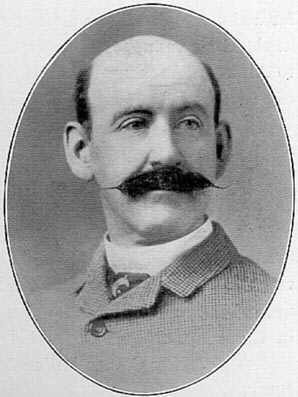
Dr. Scott Birdseye is Head of the Histronomy Department at the Montsylvania College of Agricultural Technology Design Arts. He has two cats; Bumpers and Scruffy.
The continuing story of science, and its interaction with society as a whole, is an account which shows a strong dichotomy between the beloved and revered scientists, and the infamous per-sonalities, known more for their deviance than for their research. Dr. Timothy Leary was one such deviant, who in a time of social conformity and paranoia, sought to bring enlightenment and understanding to the whole of humanity by merging Eastern mysticism, Native-American spirituality, and Western sci-ence. Although Leary’s goals as a psychiatrist were altruistic, his cultural alliances and personal behaviors cost him his university position, and his status within the psychology community, and made the mainstream of both academic and public society hostile to his research efforts and his conclusions.
At a time when Behavioralism rigidly dominated American psychology, Leary went against the mainstream to edge psychology back towards its esoteric and philosophic roots, creating a radical new view of behavior, and helping to usher in important changes in American life.
Though Timothy Leary would eventually become known as the guru of the 1960s Counter-Culture, he spent the decade of the twenties as normally as any other child of the time, his thoughts filled with baseball and images of the Wild West and the Indians who populated it. His time spent at Classical Preparatory High School was filled with extracurricular activities, including trouble making and drinking, which were probably the cause of Leary’s poor academic performance. Classmates have remembered that Leary cared little of others’ opinions of him, but was optimistic, especially during times of punishment.
Low grades and constant scuffles with authority were not brought to an end by his high school graduation in 1938, but rather remained with Leary throughout his subsequent collegiate career. In 1940, Leary entered West Point Military Academy, following his expulsion from Holy Cross College at the end of his freshman year. Westpoint shared much in common with Holy Cross however, regarding its opinion of Timothy Leary. A night of heavy drinking, following the annual Army-Navy game, brought Leary to the attention of the school’s Honor Committee. After refusing to honorably resign, the remainder of Leary’s single year at the Academy was marked by continually hazing, punishment and social isolation, a treatment which soured Leary on both Westpoint and organized authority. In true form, Leary continued his usual behavior at the University of Alabama, although he actually managed to remain enrolled long enough to graduate in 1945, with a degree in psychology. Graduate school in Washington State and doctoral work at Berkeley followed, where Leary focussed on Personality Psychology.
One would be hard pressed to find a decade in which Timothy Leary would be more out of place in than the 1950s, an era of conformity, mass consumerism and paranoia. In his book The Lonely Crowd, sociologist David Riesman described the post-war fifties as a time when Americans began, for the individualist nation’s first time, to view the national strength as more important than the individual’s needs . The collapse of the great Western empires, most notably that of the British, created the Third World, and gave the United States and the Soviet Union a battle ground for the new, nuclear fueled Cold War. Stockpiling of nuclear weapons created, for the first time in history, an atmosphere of Mutually Assured Destruction, in which a nuclear attack by either side would, with retaliatory action by the other, guarantee complete destruction of human kind. With the specter of nuclear annihilation cast over everyday life, paranoia and fear grew exponentially. Nonconformists came under attack, and social and religious harmony became paramount in the minds of most Americans. Church attendance grew enormously, although American religion in the 1950s was less about spirituality and more about civil and social obligation . To be upright and American, an individual was expected to conform to rigid and hostile standards of normality, brought about by simple fear.
His outlaw reputation seemingly behind him, the fifties saw Leary as head of the Kaiser Foundation for Psychology Research, where he explored the long-term effects of psychotherapy on patient outcomes, and came to the conclusion that traditional psychological methods were of little or no value. Other research findings, which described the human personality as made up of component behaviors which were capable of being initially taught and later restructured, led to Leary’s 1957 book Diagnosis of
Personality, which was well received by the academic psychological community.

The success of his personality theory brought Leary an invitation to a permanent position at Harvard, which he accepted in 1959. His first year at Harvard brought Leary little prominence or notoriety, however, a trip to Mexico the subsequent summer with an anthropological team, whose goal was to study indigenous religious practices, would change his reputation at the university, for it was on this trip that Leary had his first experience with peyote, a native medicinal plant with powerful hallucinogenic properties. Leary returned to Harvard, and with fellow professor George Litwin began a new research project, known as the Concord Prison Experiment, which studied the effects of the hallucinogen psilocybin on the behavior of repeat offender prison inmates with antisocial personalities.
The Concord studies showed that hallucinogenic psychotherapy had a positive effect on the prison population, reducing the incidence of repeat arrests in the test group. The study created controversy however, within the Harvard psychology department, as Leary and Litwin used themselves and their graduate assistants as the control group.
Timothy Leary was not the first psychologist to scientifically experiment with hallucinogenic drugs, nor was he the first to use them in an attempt to heal psychological conditions. Peyote, from which is derived mescaline, and which formed the chemical basis for the synthetic lysergic acid diethylamide 25, or LSD, was first used as a medicinal plant to treat all manner of conditions, and later as a religious substance, acting as the basis for the spiritual rites of the early Native-American cultures who first discovered it. Famed psychologist William James later experimented with peyote, although he drew no particular conclusions as to its psychological use. Peyote’s and LSD’s main effect is to increase serotonin levels in the brain, producing euphoria and producing a psychological action known as synethesia, a distortion of the brain’s recognition of sensory perceptions.
Following the accidental discovery of LSD’s effects, four years after its discovery in 1937, many projects were conducted, most notably by the newly created American Central Intelligence Agency, as to LSD’s psychological effects and potential uses, although the drug did not gain any real notice within the academic community until Leary’s controversial Concord Prison Experiment.
The experiment’s notoriety exploded when Litwin, infuriated by his partner’s breach of ethics, revealed that not only had Leary been using the drugs as part of his research, but also for recreational purposes, and had even been holding parties in which students were invited to use LSD and other drugs, including marijuana. Conflict with those in charge was natural to Timothy Leary, and rather than back down from the familiar authoritarian commands and threats, he continued his informal personal research with LSD, often ignoring the university’s policies and standards outright .
While his reputation at Harvard became further tarnished, international interest in the subject of LSD for use in psychotherapy was growing, and in 1961, Leary was invited to speak at the Fourteenth International Congress of Applied Psychology in Copenhagen. In his speech, he boldly declared that traditional psychology was at an end, and that a new, more existential psychology would be born, a more humanistic science concerned with the conscious mind, rather than with the rote learning of mindless conditioning:
“Up until recently I considered myself a behavioral scientist and limited the scope of my work to overt and measurable behavior. In doing so I was quite in the Zeitgeist of modern psychology…this decision to turn our backs on consciousness is, of course, typically Western… tonight, I speak to you… presenting a theory which is Chinese, in that behavior is seen as an intricate social game; Indian in its recognition of consciousness and the need to develop a more cosmic awareness, and finally Western in its concern to do good measurably well .”

The speech served as a declaration. On August 19, 1961, Dr. Timothy Leary forever broke from mainstream psychology, and began down his own scientific path. Although he was not initially rejected by the psychological community, after Copenhagen, Leary started a journey, the result of which, would be his complete ostracization from the scientific and academic communities.
At the same time that Timothy Leary became frustrated with traditional psychology, many Americans were becoming disillusioned with the conformist culture in which they lived, which relegated women, minorities and those with differing political or religious opinions to a lesser status. As poverty grew in the inner cities due to the white flight to the nation’s growing suburbs, many blacks became disenfranchised within public life, forced into a separate, but unequal, world.
These matters brought an open divide into American culture, blatantly illustrating how post-war prosperity had not reached all members of society. The landmark 1954 desegregation Supreme Court case of Brown vs. Board of Education, brought renewed strength to the ongoing Civil Rights struggle, bringing it out into the open public and giving it massive media attention . The assassination of John F. Kennedy in 1963 only further inten-sified American disillusionment. Many youths saw their parents’ world in an unfavorable light, and used the escalating conflict in Vietnam as a rallying point. Youths, dubbed the Counter-Culture, modeled themselves after the non-conformist Beat Generation, and allied themselves with the Civil Rights Movement and the new psychology on a larger scale than could be accomplished within a university setting.
This new personification however, made Leary even more controversial, and the leaders of Harvard turned him into a villain. In 1963, breaking from university life, Leary traveled the country, exploring the new culture by stopping at free-love communes, Hell’s Angel’s camps, and the homes of poets, writers, musicians, and mystics . A trip to Mexico to seek out one such mystic however, proved disastrous, as Leary was arrested on the U.S. border and was sentenced to thirty years in a federal prison. The drug convictions were too much for Harvard, which fired Leary in 1965. He was subsequently barred from the American Psychological Association. Leary, however, remained optimistic, and after five years in various prisons, and after countless legal battles, escaped from San Luis Obispo Prison and fled to Nigeria.
Free from his academic restraints, Leary began working intensely to formulate and specifically explain his new perspectives on psychology. Ever an outlaw, Leary held a grim, yet optimistic view of society and how it was governed by psychological laws. Society, in this view, functions as a balance between maintenance of the social order and the development of individual con-sciousness . Society, he maintains, is kept ordered by indoc-trinating individuals according to behavioral principals.
Just as Leary held that personality is a construct of learned be-haviors which could be broken down and restructured, so he extrapolated this principal to the whole of society. Society exists as a series of common behaviors which can be both learned and unlearned, however, those who, for whatever reason, fail to learn or unlearn society’s behaviors, they are either mentally restructured or eliminated.
Psychological stress then, stems from an individual’s innate desire to expand their own conscious-ness and society’s refusal to allow such growth. Only by separating an individual from the social order, can psycho-logical health and conscious growth occur. This separation could, according to Leary, be best achieved through the use of LSD in rituals based upon Eastern meditation. Such rituals provide for a temporary break from the ingrained behaviors instilled by society since birth, and allow for a restructuring of the mental process, which enables the individual consciousness to expand without the hindrance of social order.
The LSD experience allows a person to see themselves as an individual, rather than as a part of society, enabling them to achieve a higher level of thought and a greater freedom of behavior, liberated from psychologically harmful societal constraints.
In the Counter-Culture, Leary saw a group of people who were ripe for LSD induced behavioral modification, and began to see the establishment as a master group, in control and enslaving the free individuals through social construction of the mental processes of thought and personality. In a 1974 letter to the Los Angeles Times and the San Francisco Chronicle, Leary advocated a violent revolution by the Counter-Culture in order to free society from its masters, and create a new society, based on principals of conscious-expanding drug use to raise the level of human thought and start a new period in human evolution. Those who knew Leary, however, insisted that the letter was intended only as a final declaration of separation from the normal society, not as a literal advocacy of violence.

The timing of the letter, however intended, caused it to be interpreted literally. Starting in the late 1960s, the Peace Movement, with which Leary was associated, had grown increasingly violent. The race riots following the assassina-tion of Martin Luther King Jr., and the rioting outside the 1968 Democratic Convention were only important benchmarks in an era marked by heightened social unrest and chaos. Frustration with the lack of success in stopping war or in expand-ing civil rights, coupled with the murder of students by the National Guard at Kent State in 1970, caused many fringe groups such as the Symbionese Liberation Army, the Black Panthers, and the Weathermen to believe that peaceful protest had failed and that violent revolution was the only means left to achieving political and social change.
Many people felt that a civil war was inevitable . Thus, when Leary, who was associated with both the Black Panthers and the Weathermen, began to publicly talk of revolution, many people took notice, most notably, the FBI. While most of the would-be revolutionaries were arrested, Leary was merely scrutinized and investigated by the FBI, and managed to avoid serious charges. His reputation as an academic however, was beyond repair. In popular opinion, Tim-othy Leary was seen as a drug guru and spokesman for the dwindling and disappearing Counter-Culture, rather than as a research psychologist. Despite this, Leary continued to be involved in psychological research until his death, and was one of the first to attempt to integrate computers into psychotherapy, psychological testing and bio-feedback.

Since the turbulent days of the 1960s, many researchers have explored the use of LSD and other drugs in psychotherapy. Such research has shown that LSD creates dream-state waves in a conscious individual, and others have claimed that its use activates parts of the brain, which are rarely activated and thought to be normally utilized only in the early stages of infantile development, although, no definitive proof has been shown. The majority of research has shown LSD’s effects to be too unpredictable for use in therapy. Political pressure, no doubt tied to Timothy Leary’s outlaw behavior, has determined that the legal supply of LSD is small and funding for research projects using LSD is rare.
Although Dr. Timothy Leary’s ideas were radical and could have profoundly changed psychology’s views of society’s effect upon the individual mind’s behavioral and cognitive pro-cesses, Leary’s own well practiced anti-authoritarian views and behaviors, came at a time when American culture was caught in a conflict between a potentially dangerous Counter-Culture and a fearful conservative academia and establishment. Leary chose his allies, and as the peaceful move-ments of the mid-sixties grew into the violence of the late-sixties and early-seventies, his fate became sealed, forever one of the Counter-Culture, and never again a part of the university system.
In later decades, the radicals of the sixties embraced mainstream culture, and Leary was left with-out allies, but with a reputation tarnished and destroyed. His achievements in the field of psychology, potentially ground-breaking have been discounted as outlandish and pseudoscien-tific. Though his contributions to the science of psychology are largely ignored, Leary’s radical ideas have made him a part of the larger scope of American culture, as well known in popular society as Freud, Pavlov, or Skinner, but known as a drug guru, rather than as a respected research psychologist.
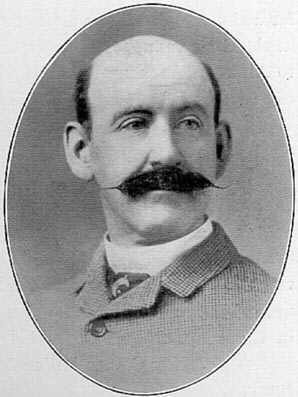
Doctor of Theosophy Scott G. Birdseye is Director of the Department of Antiquities and Anachronisms at the Montsylvanian Institute of Science and Agriculture
The twelfth century saw Jewish people divided geographically, spiritually, and culturally, spread throughout the Middle East and Europe and caught in the midst of cultural clashes between the Christian and Muslim worlds.
Born into this strife, Moses Maimonides sought unification, both of the Jewish people and of the varying ideas which dominated philosophy and theology in his time. A renowned philosopher, doctor and theologian, Maimonides began his career with writings which sought to do away with the divisions within the Jewish theology and ideas about interpretations of the Mosaic Law, and later in life sought to reconcile the Biblical and Aristotelian constructs of the world.
In a time which saw the Jewish people surrounded by a myriad of hostile peoples and philosophies, Maimonides saw unification as the only way to ensure survival of the Jewish culture and religion. However, in a world dominated by Islam, the ideas, teachings, practices and culture of the Muslims played an important role in influencing the unique writings of Maimonides, the eminent Jewish scholar of the Middle Ages.
Moses Maimonides, although the most prominent, was only one in his family’s long line of scholars1. His father, Rabbi Maimon, studied and commented on The Law in Cordova, Spain, which was a center for both Jewish and Islamic learning. Moses Maimonides was born in Cordova in 1135, and at a young age, through his father, was exposed to the eminent philosophies of the day, as well as to many Jewish writings.
The invasion of the Almohades, a group of fanatical Muslims, into Spain in 1148 disrupted the early life of Maimonides, as they sought to tyrannically force all Jews under their control to accept the teachings of Muhammad or face death. Although many Jews publicly converted to Islam while privately continuing their Jewish faith, most chose to flee, and among them were Rabbi Maimon and his family, who, unwilling to accept either alternative offered by the Almohades, fled to Morocco, and later to Palestine. In Palestine, the Latin Kingdom of Jerusalem, which held a tenuous control over the region, was no more friendly to the Jews than were the Almohades, forcing Maimon to settle in Egypt.
In response to the forced conversions of Jews in the Maghreb, Maimonides composed the “Essay on the Sanctification of the Name of God,” in which he sought to reconcile Biblical condemnations of idolatry with the pragmatic need to publicly convert for survival.
This work, which provided a stark contrast from the traditional view of accepting martyrdom as the only solution, was extremely popular with Jews throughout the Maghreb and established Maimonides as an important new voice within Jewish thought.

As his prominence grew within the Jewish community, so did his popularity with the Muslim rulers of Egypt. Maimonides became a court physician for one of the viziers of Saladin, and, as a leader of the Jewish community in Egypt, was well respected by both Jews and Muslims. Writing in Arabic, he began work perfecting the Jewish calendar system, and also contributed to the Talmud.
The most important of his early works were his defenses of the rabbinical view of The Law, which supported the Talmud as necessary to human understanding of Moses’ writings, and sought to doctrinally unify Judaism. With his background in medicine, Maimonides spoke of the rabbis as spiritual doctors, seeking to save the Jews from the disease of division and internal conflict.
By 1175, Maimonides was recognized as the sole secular ruler of the Jews in Egypt and as the greatest rabbinical authority in the world, as his ideas on the importance of the Talmud became accepted doctrine. His ultimate goal, however, was the unification of the Jewish people, and the strengthening of Jewish religion which would enable this to happen.
In his later writings Maimonides began his attempt to bridge reason and religion and to unify the Jewish philosophy with the Aristotelian sciences1. This desire is expressed fully in what is the most important of his later works, Guide for the Perplexed. The Guide, which is in the form of a letter to Maimonides’ student Joseph ben Judah, was written for the purpose of helping those who were devout Jewish followers of The Law, but also held Aristotle’s views, many of which contradict Biblical ideas.

Throughout the Guide, Maimonides discussed many different philosophical themes, including proofs of theism, the Problem of Evil, practical virtue, the authority of prophesy and of Mosaic Law, divine attributes and the relationship between morals and ethics. Written in Arabic, the lingua-franca of the region, the Guide was seen by Maimonides as the solution to every question of faith, thought and life which could be relevant to the Jewish people.
Maimonides however, was not the first to attempt reconciliation of Aristotelian philosophy with later theistic religious belief. He was aware of the earlier works involved in bringing together Aristotle and the Kalem (a grouping of early Christian proofs for theism which had been co-opted by later Muslim scholars as proofs of Islamic principles).
The influence of Muslim philosophers such as Ibn Bajjah, a commentator of Aristotle, and al-Farabi Ibn Sina, who spoke of philosophy and science as ways to use rational thought to show the truth of religious belief, can also be seen in the writings of Maimonides.
However, it was not the philosophy and religious ideas of the Muslims which had the most profound influence upon Maimonides, but rather, their political and cultural dominance of his world. In the Guide, Maimonides illustrated a correlation between earlier Egyptian slaver and the twelfth century oppression at the hands of the Muslims and Christians, and described how lessons learned in Egypt continued to provide insight, just as lessons learned under the Muslim yoke would provide insight for future generations.
While influenced by some Muslim philosophers, Maimonides refused to give up his Jewish beliefs, which formed the basis of his philosophy. He denied Muhammad and the Koran, and declared that the Jews were God’s sole representatives on earth when he wrote “After the act on Mt. Sinai, all Israel became his witnesses and no other proof was needed.” Thus Maimonides described the unnecessary nature of both Christianity and Islam, and renewed the idea of the Jews as God’s chosen people, thereby certifying in the Jewish people the need to unite not only for the practical purposes of survival, but also as a sacred duty to God.
While Muslim thought and philosophy inspired Maimonides’ greatest work, Guide for the Perplexed, only in a casual manner, Islam defined the world in which Maimonides lived. This world brought external pressure onto the Jewish people, leading them into a choice of two possible futures; unification and survival or division and extinction. Maimonides took it upon himself to do what he could to ensure that the Jewish people took the first choice. His writing, which sought to provide a union of several differing religious ideas within Judaism and also to provide for a strengthening of the Jewish doctrine by reconciling it with the world’s dominant scientific view of the natural universe, enabled the Jewish people to come together in order to secure the survival of their unique philosophy and way of life.
For more information on Mainmonides and other notable Hebrews please consult your local library’s Non-Fiction Section, visit your local neighborhood Rabbinical scholar, or just type “Maimonides” into an internet search engine. These and other methods of information gathering should yeild you a lifetime’s worth of study materials on Mainmonides and other amazing scholars of the Jewish faith. Enjoy.
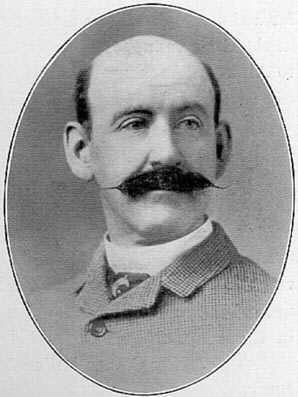
by Scott G. Birdseye, Doctor of Philosophy
Often the popularity and longevity of stories and myths lies in the strength of the central antagonist. Christian mythology follows this trend, as its villain remains one of the most compelling and infamous characters in the whole of literature. Despite the integral nature of Satan within Christianity’s cosmic drama, the character is not a purely Christian construct and receives only limited mention in the Bible. The character, known alternately as Satan, Lucifer, the Devil, Beelzebub or the Beast, is an amalgamation of pagan Celtic and Greek, Hebrew, and Zoroastrian figures molded into its most recognizable representation by early Christian theologians, Medieval European philosophers and writers of the Renaissance. Continue reading