
Albania
Reply

Advice from Old Mexico
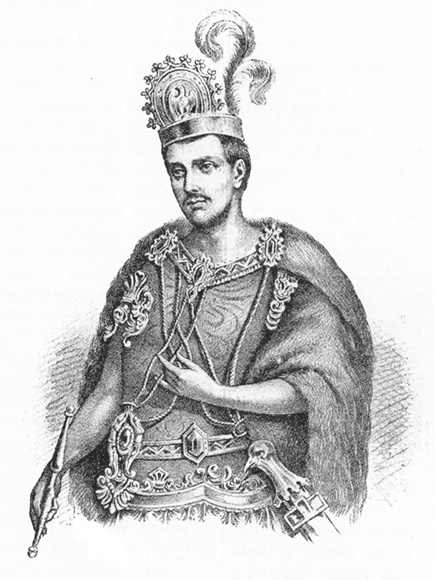
Montezuma is a glorious king whose glory shines
down upon all through the ageless bounds of eternity.
Fried chicken is his favorite food.
Dear Montezuma,
I recently borrowed someone else’s rhubarb. I used it in a wonderful pie, which I am consuming at this moment, but I feel a bit disaffected now. You see, I already have my own rhubarb and I’m afraid it will feel neglected should it discover that I used another rhubarb whose provenance was not from my own rhubarb. Rhubarb is a temperamental root vegetable and I don’t quite know how I might deal with its outbursts should it discover my scurrilous usage of rhubarb not my own. I was thinking, perhaps, of covering up the obvious foreign rhubarb with a small coconut I have waiting on the window sill. How do you think I might appease my forlorn ground-inhabiting edible plant?
Regards,
Denny Palmer, Age 27
Denny, Denny, Denny, Denny, Denny,
Reviewing your letter brought back so many memories of my studies at one of the United Kingdom’s lesser-known colleges (I’m sorry to say that I am not an Eton man). My second year Garden Psychology course was one of my favourite little expositions of knowledge. I greeted each day with an overarching eagerness to get to Garden Psychology and learn all about the feelings and complexities of the carrot, the sexual dysfunctions of herbs such as basil, the obsessive disorders of legumes and the deep and dark psychological pathologies of root vegetables, so akin to their growing places in the black, moist soil. Indubitably whatever Garden Psychology course was offered at your secondary educational facility was ineffective. This writer has a slithering guess that your secondary education may not even have included a Garden Psychology course (I would ask for my money back). Possibly you were absent or not paying attention on the day that the emotional makeup of the rhubarb was covered by your instructor. In some cases, rhubarb can be poisonous if not treated properly because it is a quite delicate and serene member of the plant kingdom and it is frequently noted by other vegetables for its steadfastness and unfickletude. To make sure I am not recalling this improperly, I checked my Vegemotional Psychometry Manual III. You should take a gander at your no-doubt dusty copy of this fine tome. It clearly states on page 433, under the general characteristics of rhubarb, that this vegetable is quite calm and collected, even under pressure. Your classification of rhubarb as a root vegetable will be discussed in a future column. Perhaps you have it confused with rutabaga, likely another manifestation of the poor education you received early on.
To our fine friend Montezuma,
We here at the Cal-Dap thumbtack and light emitting diode plant and merchandising center are huge fans of your column. We read it every month and keep clippings up on the break-room refrigerator. We discuss it over coffee and on the assembly line for thumbtacks (doing this on the LED assembly line would be too dangerous and we don’t speak there). Larry “Hambone Runner” Logan on machine #5 almost has every letter from your fifth book memorized and likes to repeat them during union meetings and at management meetings during dull moments (of which there are many!). Joe “Gristle” Sanderson, the vice-president of sales, likes to record himself reading the columns and play them in his office when he thinks no one is listening. We’ve had a few problems recently because our town is small and the plant is really the only source of employment for most citizens. We’re citizen-workers, important to the defense of this great land. That’s why I was going to write to you. You see, we don’t have enough copies of Axes & Alleys to go around here in Lothariana. We’ve spoken to the distributors many times, but they refuse to send more copies. There are about 13 copies for every 58 residents. We sometimes find it hard to share copies with one another. Do you have any advice to give us?
Yours Truly,
Ernie “Lambchop” Jones
Cal-Dap Tackfitters Local 133
Lothariana, FA
Dear Lambchop,
I am very concerned after the receipt of the above letter. You may be unaware, but you are infringing upon several intellectual properties which belong to me. To avoid any further action, please send me accountings for the following royalties I may be owed:
1. number of times a clipped article has been viewed
2. number of times Hambone Runner has repeated my articles
3. number of times Joe Sanderson’s recordings have been played
4. number of times a copy of Axes & Alleys has been shared
5. number of times Joe Sanderson has been referred to as “Gristle”
The above are all rights reserved by my person and I am owed monies for each. As such, an independent auditor will arrive in Lothariana after receipt of your numbers. By my rough calculations, the township owes me close to $1.2 million dollars. Copies of this response have been sent to the Cal-Dap management as well as Lothariana’s City Council. Please see that further infractions do not occur. I am most disturbed by the unauthorized use of my trademarked phrase “Gristle.” This use must cease immediately!
Dearest Montezuma,
Is there really nowhere to go from here but up?
Confused On Relevant News
Dear CORN,
Looking at the postmark from your letter and the penmanship in your letter, I am positively convinced that you are likely to continue in a downward spiral of irrelevancy and doubt. Were that I could remember how to tie a noose for you.

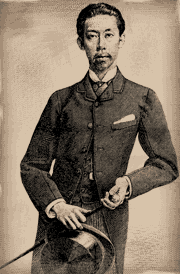
H.G. Peterson is founder of the International
League of Lawn Mowing Visionaries, a group
devoted to creating a new age of lawn care for
all peoples of the world.
“The Future Never Happened”
Where’re the cities on the Moon?
Or the colonies in space.
Our wrist radios, Our paper clothes,
Or a peaceful human race?
Man, I’ve waited for so long
But damn, the Futurists were wrong.
Where are the cities under domes?
And those deep under the sea,
Flying cars and my jet pack,
Deadly ray guns that go “zap!”
Robot servants serving me?
And you know what really kills?
I never got proton energy pills!
All we got was CGI films,
And pointless camera phones,
Blogs across the internet,
Stuff I didn’t wanna get,
And reality TV shows.
Mad cow disease and terror attacks
Hey, I want my World’s Fair money back!
The world’s still full of doom and gloom
I just want to live on the Moon…really soon.
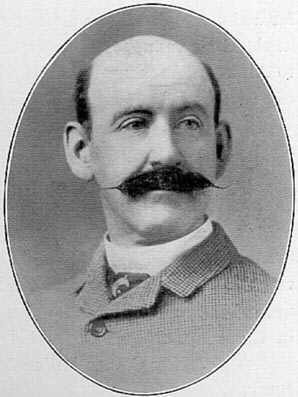
Dr. Scott Birdseye is the world’sforemost autodidact.
His manyworks include the notable tomes The Deities’ Chariots
and Deities from the Cosmos.
European society in the Middle Ages was dominated by a rigid structure which dictated nearly ever aspect of the people’s lives. This arrangement held the most power over the lives of the society’s lowest strata and thus, for the common laborers, life was defined by monotony and the endless struggle of physical existence. These aspects of peasant life on the manor are most evidently illustrated by the details of the commoners’ diet.
Peasants’ lives revolved around not only the ever continual production of food, but also around the necessity to meet the basic needs of survival. Thus, food was the central element in the lives of the peasants, acting as both their occupation and sustenance. Agricultural production was the singular purpose of the lives of the Medieval peasantry in Europe. The population of the Middle Ages was stratified into three major groupings: the nobility, the clergy and the laborers, although there were many other groups such as merchants and craftsmen whose roles did not fit with this concept.
Within the three major ranks of occupation, the nobility, whose place was to provide defense, and the clergy, who focussed on matters of religion and learning, were together only a small percentage of the population as a whole. The majority of the people were classified as Laboratores, commonly called peasants or serfs. It was the duty of the peasants to provide the actual labor which allowed the other divisions of society to exist. Thus, the life of the Medieval peasant consisted entirely of performing the tasks of farming; producing foodstuffs and other agricultural goods.
The Manor System provided for the organization of peasant labor output in Medieval Europe. The manor acted as a relatively self-contained agricultural unit, consisting of peasant homes clustered into small villages, plow lands, pastures, forests, water supplies such as rivers, streams and ponds, and the manor house, home of the manor lord, the noble land holder who ruled over the entire unit. While the primary purpose was to provide food, the manor also functioned as an economic entity to provide labor management and to produce a profit for the land holding lord. A system of mutual responsibility governed the manor; in exchange for labor the lord was expected to treat the peasants properly and not over work them. The lord was also expected not only to provide protection to the peasants as well as gifts on special occasions, but also to act as a mediator, judge and political and legal authority over his holdings.
Although the lord did provide protection and maintenance of social order, peasant life on the manor was fraught with difficulty and mired by monotony. In no way were these extremes more evident than in the peasant diet. Food on the manor was limited by what the land could provide, and for the most part, variety was unknown to the Medieval peasantry.
The diet of the commoners was essentially vegetarian and depended upon the staple crops of the particular geographical location. The most common crops were the cereals: wheat, oats, rye, and barley. Garden crops, which were cultivated on a much smaller scale, included vetches, beans, peas, onions, beets and lettuce, all of which provided some supplement to the daily menu. The most common vegetable products in Northern Europe were the cabbage and the turnip, while in the south olives and grapes were also privately grown. Despite these slight supplements, the peasants’ diet consisted mostly of grain, cooked into gruel, porridge, or coarse black bread made from rye, oats or barley.
Wheat bread was, for the most part, eaten only by the nobility. Daily fare for the commoners was often pottage, a dish which contained mostly barley or oats with some vegetables, which were slowly cooked in a large pot over the course of the entire day. Flavoring was sparse and rarely available to the peasants, although wild mustard seed, poppies and wild honey were occasionally used for seasoning, as was olive oil in Southern Europe. Pottage was usually eaten later in the day, so morning meals usually consisted of nothing more than bread and beer. The only available beverage for the Medieval peasantry was beer, which was brewed, without hops, in nearly every village. In Southern Europe wine of poorer quality was a common drink for peasants where beer was not available.
Dairy products such as cheese, eggs and butter were common in the Medieval world, although they were not always available for the peasants. Generally, sheep and goat products were the only diary foods available to the peasants, as bovine milk was reserved primarily for the nobles, although eggs were available to peasants in a limited manner. Meat was almost entirely unknown to most peasants, except at special occasions. Although many peasants raised chicken and sheep, eggs and wool were generally more valuable than meat, although older, less productive animals could be slaughtered for food.
Wild game unclaimed by the lord, which usually consisted of very small birds and fish, could also provide some meat for the laborers. As salt was both rare and expensive, peasants soaked what meat they had in lye to prevent spoilage. Despite this, meat was a rare thing in the average peasant’s life, seen only on the most important of holidays. In many ways, the calendar dictated the diet of the manor’s peasants. Although the calendar year defined the important agricultural tasks and labors, it also defined the significant holidays, feasts, and celebrations, occasions which provided the only available breaks from the tiresome monotony of the peasants’ lives.

The Lenten Breakfast, a feast which coincided with Easter was an important event in the peasants’ year. Following the penitence of Lent, the lord was expected to provide a sheep or a pig for the peasants’ observance of the feast. Martinmas was another important occasion on the manor, which peasants celebrated by slaughtering their oldest, weakest ox to provide meat for the long winter. Special events also provided peasants an opportunity to drink wine and eat wheat bread while performing the sacrament of communion. Peasants were often forbidden from taking communion more than once a year.
Manorial lords often tried to limit observance of holy days to no more than four a year, in order to keep peasants at work, but also because the lord was often expected to provide extra food for holy day feasts. Even with holiday feasts and gifts from the lord, food was always scarce for peasants, and starvation was terribly common especially during the long winter months. All year round, life for the peasants was difficult and tedious, and the few circumstances which provided any relief were fully appreciated.
In the fourteenth century, the epidemics and plagues which had ravished Europe reached their deadly crescendo, culminating in the waves of Black Death which swept across Europe erasing entire villages. A large portion of the population of Europe died from the outbreaks of plague in the mid-fourteenth century, including a great many peasants. Without readily available peasant labor, the manorial system began to decline, heralding the rise of the political and economic power of the cities. As the dominance of the manor disappeared, the agricultural system of Europe was forever altered, although the lives and diet of Europe’s common laborers changed little, although the later Middle Ages did see the rise and proliferation of taverns and other organized establishments which did cause some changes to diet.
Though diet may seem an unimportant aspect of the Medieval world, diet was in some ways an important avenue for social, cultural and political change. Spices, used to season food, were one of the main commodities traded with the East, and it was the search for new spice trading routes which provided one of the main incentives for the expansions of the later Age of Discovery. Though in later centuries, many changes in society impacted and changed diet, for the peasants of the Medieval manor, their diet was similar to their lives; bland, boring and monotonous.